Pain when you reach overhead, a shoulder that wakes you at night, or an arm that has slowly lost its range are among the most common reasons active adults seek help. The shoulder is the most mobile joint in the body, which also makes it the easiest to injure and the slowest to settle. This article explains which shoulder problems suit cell-based treatment and which do not.
Reading the Symptoms: Cuff, Joint or Frozen Shoulder
Three patterns cover most persistent shoulder pain. Rotator cuff problems cause pain on reaching, weakness and a painful arc of movement. Shoulder osteoarthritis causes deep ache, grinding and gradual stiffness, usually after fifty. Frozen shoulder causes progressive stiffness in every direction, often after a minor injury or with diabetes.
These patterns look similar at first and are easily confused with neck problems referring pain into the shoulder. Examination plus ultrasound or MRI separates them, and that diagnosis drives every treatment decision that follows. The same diagnostic discipline applies to other joints, as described in our hip pain guide.
Where Stem Cell Shoulder Treatment Fits
| Condition | Role of cell therapy | Evidence maturity |
|---|---|---|
| Partial rotator cuff tear | Support tendon healing after failed conservative care | Growing randomised and cohort data |
| Shoulder osteoarthritis | Reduce inflammation, support remaining cartilage | Early clinical studies, moderate |
| Chronic tendinopathy | Biological support where repeated cortisone has failed | Smaller studies, promising |
| Full-thickness tear or advanced arthritis | Not a substitute for surgery | Surgical opinion first |
Mesenchymal stem cells work largely through signalling: calming inflammation, releasing growth factors and supporting the local repair environment. That background is covered once in our stem cell therapy explainer, so here the focus stays on the shoulder.
The Evidence by Shoulder Condition
For partial rotator cuff tears, several controlled studies report better pain and function scores when cell or PRP-augmented treatment is added to rehabilitation, with some imaging evidence of improved tendon healing. For glenohumeral osteoarthritis, the literature is earlier but follows the pattern seen in knee osteoarthritis, where the data are deepest.
The consistent finding across studies is that cell therapy is a support for repair, not a shortcut past it. Outcomes are best when the injection is accurate, the rehabilitation is followed, and expectations are set in months. Related joint evidence is reviewed in our knee osteoarthritis article.
What the Procedure and Recovery Involve
- Physician assessment with review of ultrasound or MRI imaging
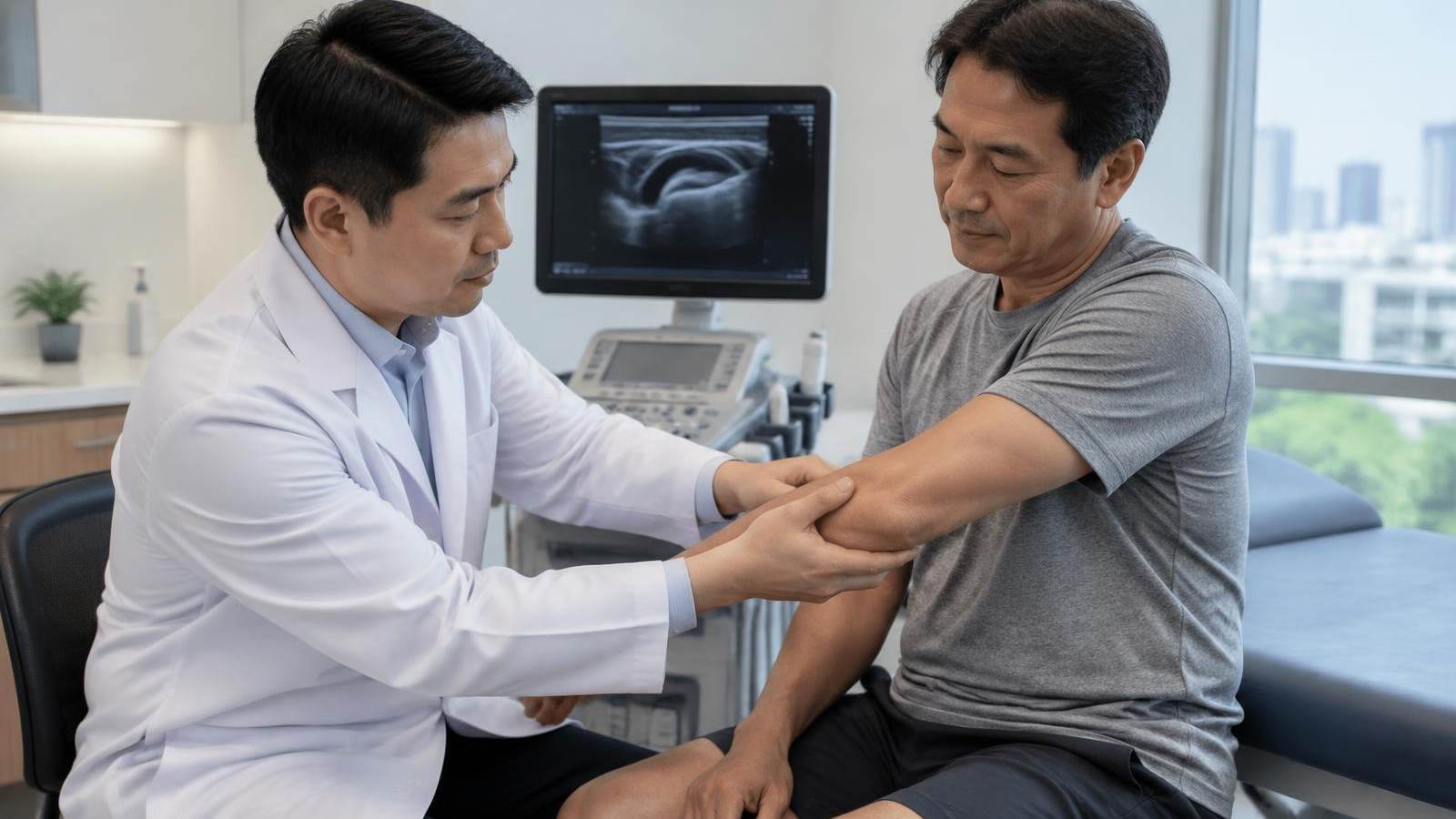
- Ultrasound-guided injection into the tear, tendon or joint under local anaesthetic
- Same-day discharge with written aftercare instructions
- A graded physiotherapy programme starting within the first week
- Review at six to twelve weeks against the recorded baseline
The injection itself takes minutes; the recovery is the real treatment. Patients who follow the loading programme do consistently better than those who rest the shoulder completely.
How Shoulder Treatment Is Delivered at Our Bangkok Facility
At MRC Healthcare, shoulder cases begin with a physician consultation and imaging review before any injection is offered. Cell preparation follows documented laboratory standards, and every injection is ultrasound-guided so placement into a partial tear or the joint space is confirmed on screen rather than estimated.
Where physiotherapy is part of the plan, the programme is written down for your therapist at home. The wider approach to joint conditions is described on our arthritis and joint treatment page.
Planning Shoulder Treatment Around a Thailand Trip
A shoulder injection fits a short visit well: consultation and imaging review on day one or two, the procedure shortly after, and a review before you fly. Most patients plan five to seven days in Bangkok. Sling use is rarely needed, and you can travel home comfortably within days.
Bring your MRI or ultrasound reports and a list of previous treatments, especially any cortisone injections and their dates. Practical travel details are covered in our Thailand medical travel checklist.
Find Out Whether Your Shoulder Suits Cell Therapy
Share your imaging and history with our physicians, and they will tell you plainly whether stem cell shoulder treatment is a reasonable option or whether another path serves you better.
Schedule a Consultation