Diagnostics
EIS — Electro Interstitial Scan
A non-invasive, radiation-free bioimpedance scan that maps interstitial fluid and tissue conductivity across the body, giving our physicians an additional data layer when planning regenerative and metabolic care.
- Scan time
- About 5 minutes
- Radiation
- None
- Preparation
- Minimal
- Results
- Same visit
What is an Electro Interstitial Scan?
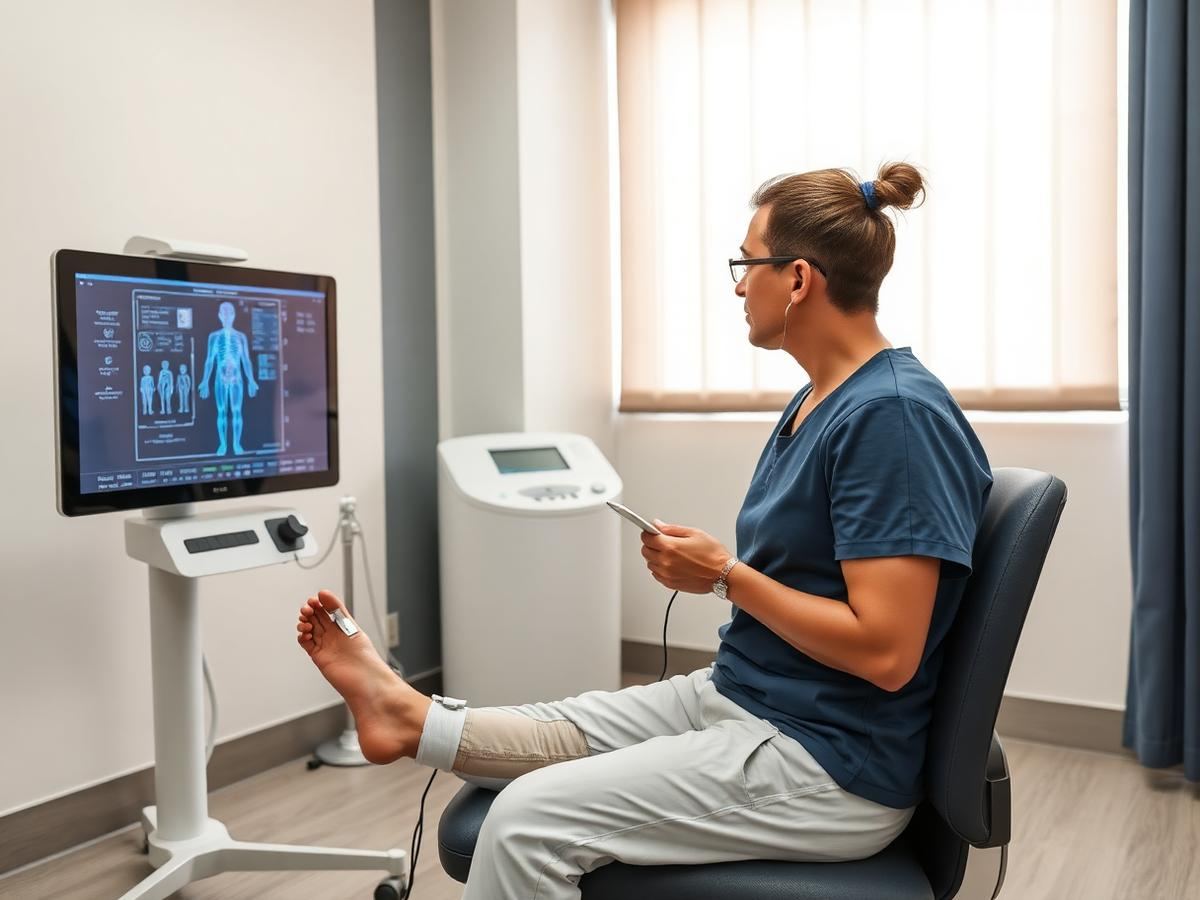
EIS (Electro Interstitial Scan) applies a very low-intensity direct current through electrodes placed on the hands, feet and forehead. The device measures how easily that current passes through interstitial fluid — the fluid surrounding your cells — and models regional differences in conductivity.
The output is a screening report covering estimated tissue and fluid distribution, autonomic balance indicators and oxidative stress markers. It is a functional screening tool, not a diagnostic imaging study: findings are always interpreted alongside your history, physical examination and laboratory blood work.
At MRC Healthcare, EIS is most often used at baseline and at follow-up visits so changes can be tracked objectively over a course of care.
What the scan actually measures
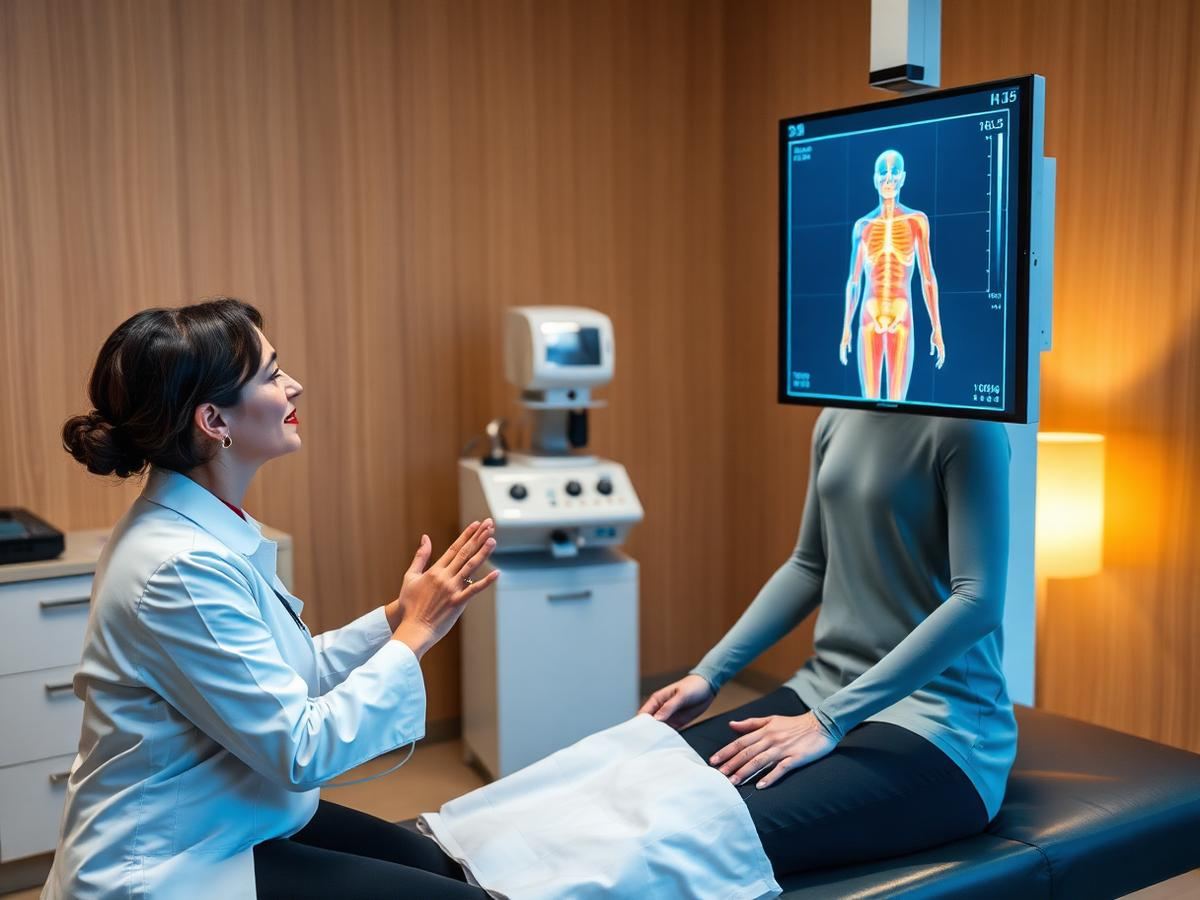
EIS passes a very low-intensity current between surface electrodes placed on the hands, feet and forehead, then measures how easily that current moves through interstitial fluid. Differences in conductivity are mapped into a whole-body report.
The output is a functional screening picture — hydration and fluid distribution, autonomic balance patterns and general metabolic markers. It is a prompt for further investigation, not a diagnosis in itself.
Non-invasive: no needles, no contrast and no ionising radiation
Whole-body map generated within minutes of the scan finishing
Always interpreted alongside your history, examination and blood work
Useful as a repeatable baseline when tracking a longer treatment plan
Results are reviewed with a physician in the same visit, alongside your other findings.
What the scan looks at
Fluid distribution
Regional interstitial fluid and hydration patterns across the trunk and limbs.
Autonomic balance
Indicators of sympathetic and parasympathetic activity that relate to stress and recovery.
Metabolic screening markers
Screening-level indicators used together with blood work to guide further investigation.
Progress tracking
Repeatable measurements that let your physician compare baseline and follow-up visits.
Who it may suit
Patients starting a regenerative or longevity programme who want a documented baseline
Anyone with fatigue, poor recovery or fluid-retention symptoms undergoing broader assessment
Patients already in treatment who want objective follow-up measurements
International patients consolidating several assessments into a short Bangkok visit
What a session involves
Preparation
You remain clothed and are asked to remove metal jewellery. Skin contact points are cleaned before electrodes are placed.
Measurement
You rest still for roughly three to five minutes while the device cycles through its low-current measurements. The current is not felt by most patients.
Report generation
The software produces a structured report immediately after the scan completes.
Physician review
A doctor reviews the report with you in context of symptoms, examination findings and laboratory results, and recommends next steps.
How to prepare
Before the scan
Stay normally hydrated, avoid heavy exercise and alcohol beforehand, and remove metal jewellery. Hands and feet are cleaned so the electrodes make good contact.
During the scan
You sit or lie still for a few minutes with your hands and feet resting on the electrode plates. The current is imperceptible for most patients.
After the scan
There is no recovery period. Your physician reviews the report with you and decides whether laboratory tests or imaging are warranted.
Important considerations
EIS is a screening and monitoring aid — it does not diagnose disease and does not replace imaging or laboratory testing.
The scan is not suitable for patients with an implanted pacemaker or other active electronic implant.
It is not performed during pregnancy.
Results are only released with physician interpretation.
How we interpret EIS responsibly
- EIS is a screening and monitoring tool. It does not diagnose disease and never replaces blood tests, imaging or specialist assessment.
- Readings are affected by hydration, recent exercise, food and skin contact quality, so trends across repeated scans are more informative than a single result.
- Any abnormal pattern is followed up with a conventional investigation before it influences a treatment decision.
- For international patients, the scan is usually scheduled on the first assessment day so results can inform the rest of the visit.
Frequently asked questions
Related care at MRC Healthcare
Book Your Session
Our medical team can review your history and advise whether this is appropriate for you. International patients are welcome.
MRC Healthcare
Reviewed by MRC Healthcare Medical Team
Last updated: