Supportive Therapy
Hyperbaric Oxygen Therapy (HBOT) in Bangkok
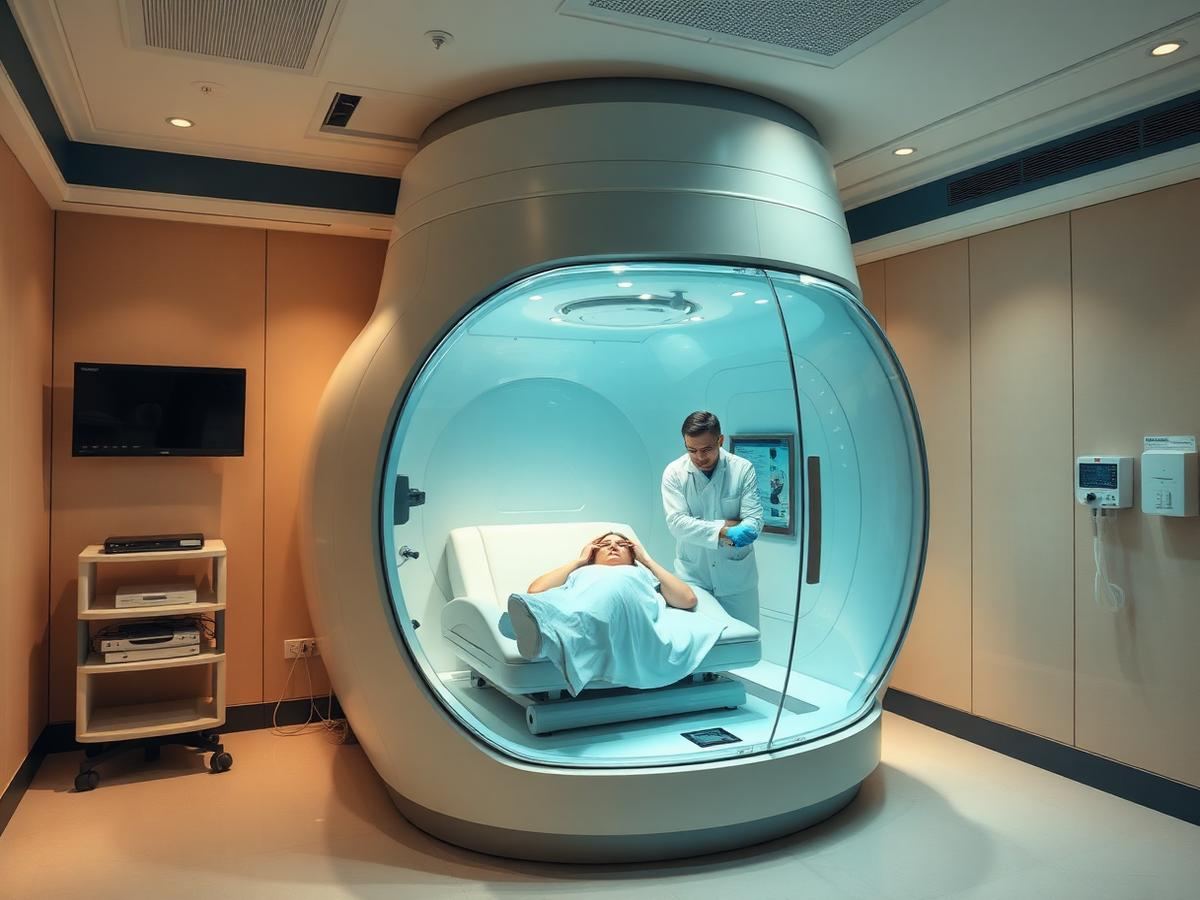
Hyperbaric oxygen therapy in Bangkok at MRC Healthcare: breathing oxygen inside a pressurised chamber raises the amount of oxygen dissolved in your plasma, supporting tissue oxygen delivery, wound healing and recovery as part of a supervised care plan.
- Session length
- 60-90 minutes
- Delivery
- Pressurised chamber
- Screening
- Medical review first
- Recovery
- No downtime
What is hyperbaric oxygen therapy?
In hyperbaric oxygen therapy (HBOT) you rest inside a chamber where the ambient pressure is raised above normal atmospheric pressure while you breathe a high concentration of oxygen. Under pressure, far more oxygen dissolves directly into the blood plasma, so oxygen can reach tissues that are poorly served by red blood cells alone.
HBOT has established, evidence-based indications in medicine — including problem wounds, diabetic foot ulcers, certain infections, radiation tissue injury and decompression illness. It is also used more broadly as supportive care alongside rehabilitation and regenerative treatment.
At MRC Healthcare, sessions are prescribed after a medical review and are delivered under supervision, with pressure and session length set by your physician rather than by a fixed package.
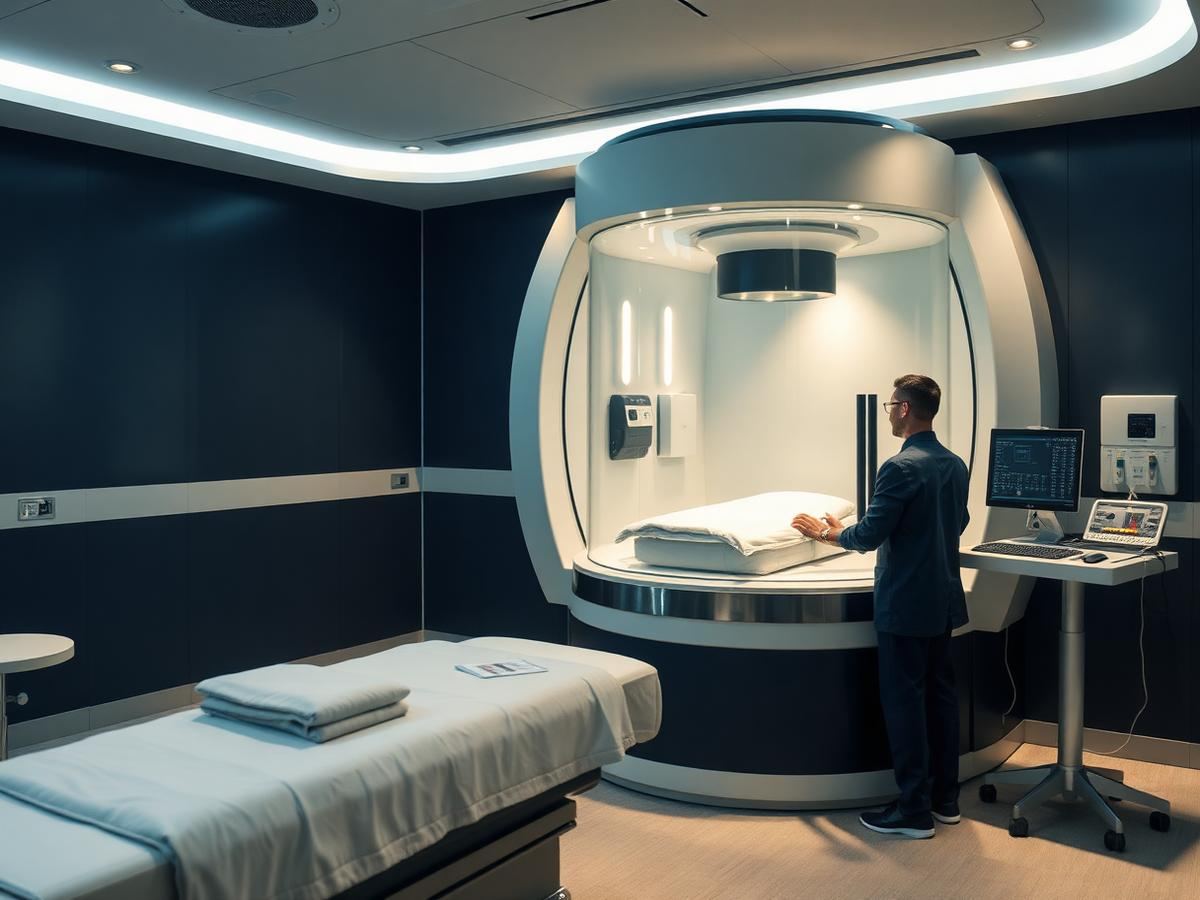
Inside the hyperbaric chamber
Treatment takes place in a pressurised chamber where the surrounding pressure is raised above normal atmospheric pressure. Under those conditions far more oxygen dissolves directly into the blood plasma, so oxygen can reach tissue that red blood cells alone supply poorly.
Pressure is increased gradually at the start of the session and released gradually at the end. During the descent you feel fullness in the ears, similar to a plane landing, and are shown simple equalisation techniques before you begin.
Chamber pressure and session length set by the prescribing physician
Continuous two-way communication with the attending technician
Ear equalisation coaching before the first session
Vital signs and blood glucose checked where clinically indicated
Sessions are supervised from a control console throughout pressurisation.
How it is used
Tissue oxygen delivery
Raises dissolved plasma oxygen so it can diffuse into poorly perfused tissue.
Wound healing support
Used as adjunct care for problem wounds and diabetic foot ulcers under medical supervision.
Recovery and inflammation
Supports recovery protocols where oxygen delivery and inflammatory control are relevant.
Programme integration
Scheduled alongside regenerative, vascular or rehabilitation care where clinically appropriate.
Who it may suit
Patients with slow-healing or problem wounds, including diabetic foot ulcers, as adjunct care
Patients recovering from surgery, injury or intensive rehabilitation where oxygen delivery is a limiting factor
Patients with late radiation tissue injury referred for adjunctive oxygen therapy
Patients in a regenerative programme whose physician has identified HBOT as a useful adjunct
What a session involves
Medical screening
A physician reviews your history, chest and ear health, medication and any contraindications before your first session.
Compression
Chamber pressure is raised gradually. You equalise your ears as you would on an aircraft; our team coaches you through it.
Treatment phase
You rest and breathe normally at the prescribed pressure. Sessions typically run around 60 to 90 minutes and you can talk with staff throughout.
Decompression and review
Pressure returns to normal slowly. Your response is documented and the plan for subsequent sessions is confirmed.
Preparing for a session
Medical screening
Chest assessment, ear examination and a review of your medication and history are completed first — untreated pneumothorax and certain lung conditions rule the therapy out.
On the day
Wear cotton clothing supplied or approved by the clinic. Lotions, oils, hair products, lighters and electronic devices are not permitted inside the chamber.
After the session
Most patients resume normal activity immediately. Mild ear fullness or tiredness can occur; diabetic patients have glucose rechecked before leaving.
Important considerations
HBOT requires medical screening. It is not suitable for everyone and is not offered without physician approval.
Untreated pneumothorax is an absolute contraindication. Certain lung conditions, recent ear or sinus surgery, uncontrolled fever and some chemotherapy agents require review first.
The most common side effect is ear or sinus discomfort from pressure changes; temporary vision changes and fatigue can also occur.
HBOT is supportive care and is not presented as a cure for any condition.
Clinical context for international patients
- Hyperbaric oxygen therapy has established, evidence-based indications — including problem wounds such as diabetic foot ulcers, late radiation tissue injury and selected infections — where it is used as part of a wider treatment plan.
- Outside those indications it is used supportively and should not be presented as a proven treatment for unrelated conditions; our team will tell you plainly which category your case falls into.
- Courses are usually delivered over consecutive weekdays, so international patients should plan an uninterrupted stay rather than isolated appointments.
- Flying immediately after a course is generally discouraged; allow a clear interval before departure as advised by the treating physician.
Frequently asked questions
Related care at MRC Healthcare
Book Your Session
Our medical team can review your history and advise whether this is appropriate for you. International patients are welcome.
MRC Healthcare
Reviewed by MRC Healthcare Medical Team
Last updated: