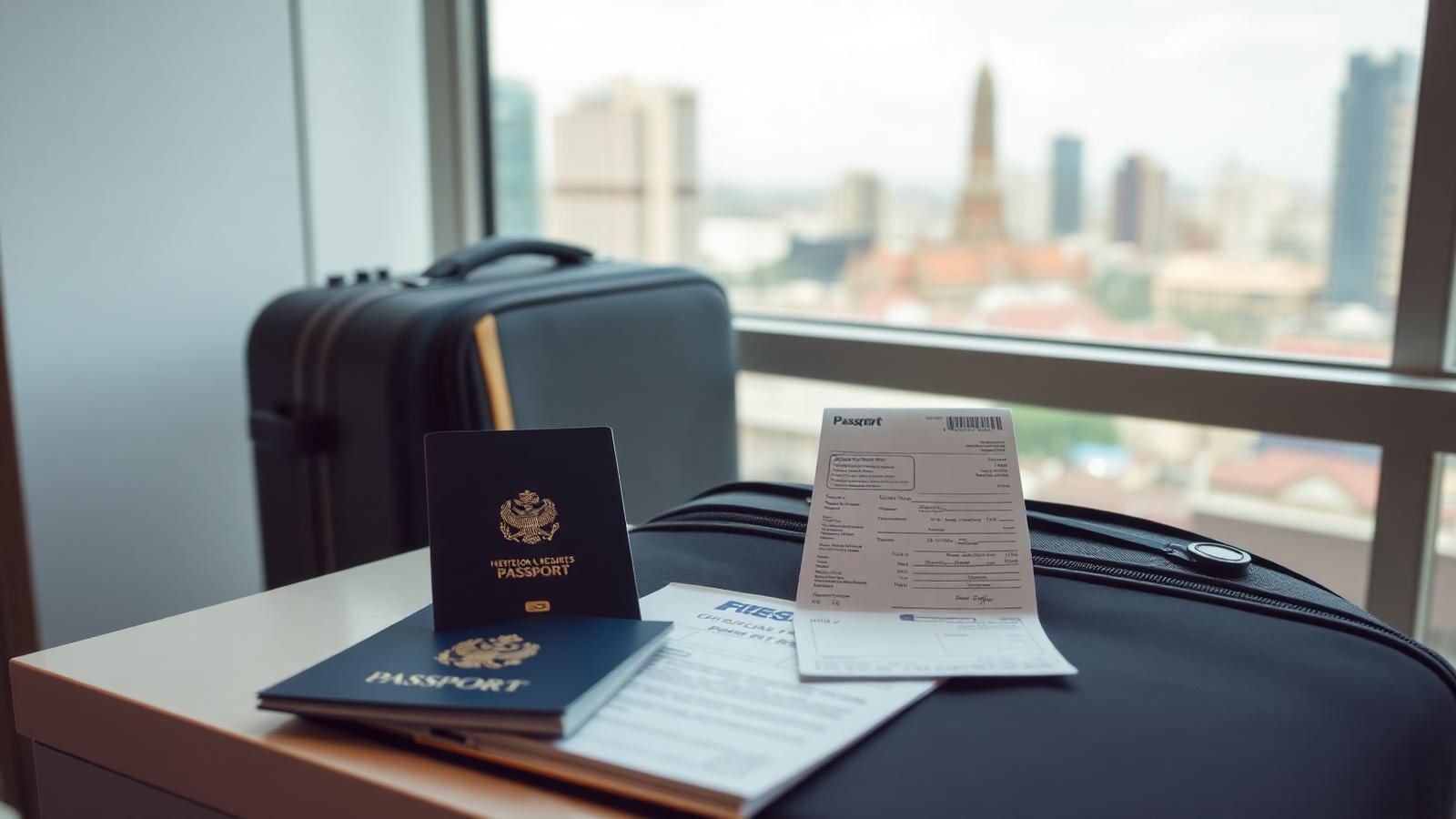
Before You Book: Records to Gather
Nothing shortens a first consultation like arriving with complete records. Gather recent blood results, imaging reports and the underlying images where you can obtain them, specialist letters, and a full list of medications, doses and allergies.
Send these ahead rather than carrying them. A remote review before you fly is what determines whether the trip is worth making at all — the background sequence is described on our guide for international patients.
Visa, Length of Stay and Timing
Entry requirements depend on your nationality and how long you intend to stay, and they change. Check the current rules with the Thai embassy or consulate for your country before you commit to flights, particularly if your plan runs beyond a standard short visit.
Build the itinerary around the clinical schedule rather than the other way round: consultation and baseline testing first, treatment days in the middle, review before departure at the end.
Choosing Accommodation Near Treatment
Bangkok traffic is the variable most travellers underestimate. Staying within a short, predictable journey of the facility removes stress on treatment days and makes an unplanned review appointment trivial rather than disruptive.
Practical features matter more than luxury: a lift, a kettle or small fridge for medication, reliable air conditioning, and food options nearby that suit any dietary restrictions.
What to Bring to the First Consultation
Bring your passport, the original or digital copies of your records, your medication list, and any devices or aids you use routinely. Write down your three most important questions in advance — consultations move quickly and questions are easy to forget.
If you are travelling with a partner or family member, bring them. A second set of ears at the consent conversation is genuinely useful.
Recovery Days and Flight Planning
Avoid scheduling a long-haul flight for the day after your final treatment. A buffer of recovery days allows any expected short-term reaction to settle under supervision and leaves room if the schedule shifts.
Confirm with your physician when flying is appropriate for your specific procedure, and choose flexible fares where the itinerary depends on clinical progress.
Follow-Up From Australia, Singapore or Europe
Before departure, agree how follow-up will work: who you contact, through which channel, and at what intervals your progress will be reviewed. Time zones make this worth settling in writing rather than assuming.
Give your home physician the written summary as soon as you return, so any ongoing management is coordinated. Our team can be reached through the contact page or on WhatsApp.
Insurance and Documentation
Read your travel policy carefully: many exclude planned medical treatment abroad while still covering unrelated illness or accident. Knowing which applies to you before departure avoids an unpleasant discovery later.
Keep copies of everything — consent forms, treatment records, aftercare instructions and receipts. Documentation is the part patients most often neglect and most often need. You can see the range of what is offered on site on our services overview.
Plan Your Trip With Our Team
We review your records before you book anything and set out a realistic schedule around your flights. Learn more about MRC Healthcare or arrange a consultation.
Schedule a Consultation