Plasmapheresis is one of the most misrepresented treatments in private medicine. It is a genuine hospital-grade procedure with clear indications, and it is also marketed in places as a general blood cleanse. This article separates the two, starting with the clinical picture that actually leads a physician to consider plasma exchange.
Flares, Weakness and Relapse: When Antibodies Are the Driver
Plasma exchange is considered when circulating antibodies or immune complexes are doing measurable harm and removing them quickly is expected to change the course of illness. The pattern that raises this question is usually acute or rapidly progressive rather than the slow grumble of chronic autoimmune disease.
- Ascending weakness or numbness progressing over days
- Double vision, drooping eyelids or swallowing difficulty that worsens with use
- A neurological relapse not responding to high-dose corticosteroids
- Rapidly deteriorating kidney function with a positive antibody test
- Documented high antibody titres alongside clear organ involvement
Rapidly progressive weakness, breathing difficulty or swallowing problems are emergencies requiring hospital assessment immediately, not an outpatient booking. Slower autoimmune patterns are discussed in our article on stem cell therapy for autoimmune conditions.
What Plasmapheresis Removes and What It Does Not
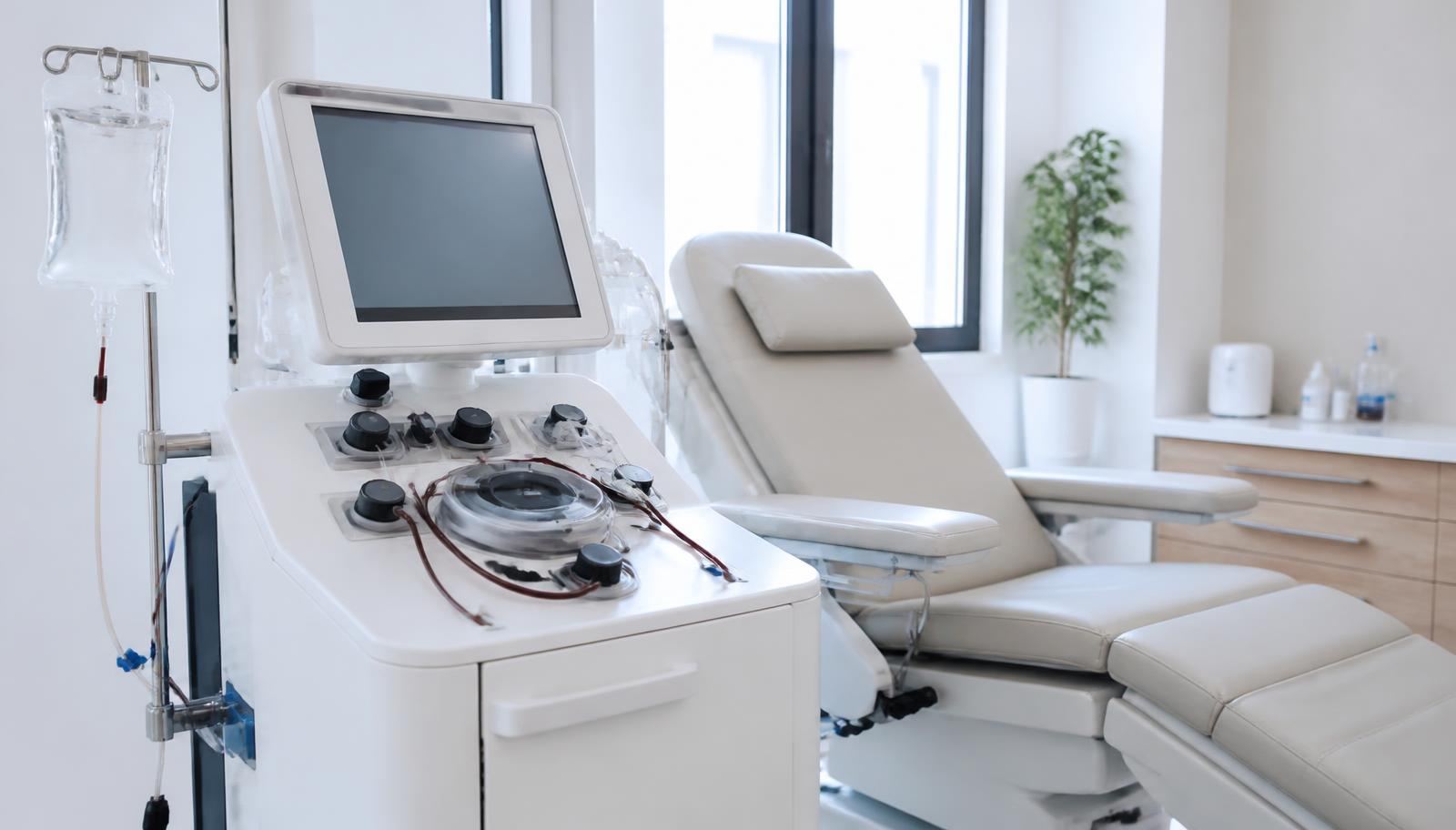
The machine separates whole blood by centrifugation or membrane filtration. Plasma, which carries antibodies, immune complexes, complement components and protein-bound substances, is removed and replaced with albumin solution or donor plasma. Red cells, white cells and platelets are returned to the patient. A standard exchange handles roughly one to one and a half plasma volumes.
What it cannot do is change antibody production. The immune cells generating those antibodies are unaffected, which is why concentrations rebound over subsequent days and why plasma exchange is nearly always paired with immunosuppressive or immunomodulatory treatment. It also removes useful plasma proteins, including clotting factors, which is one reason sessions are spaced and monitored.
Established Indications for Plasma Exchange
| Condition | Rationale | Standing in guidance |
|---|---|---|
| Guillain-Barre syndrome | Removal of pathogenic antibodies in acute phase | First-line accepted therapy |
| Myasthenia gravis crisis | Rapid reduction of acetylcholine receptor antibodies | Accepted in acute deterioration |
| Steroid-refractory demyelinating relapse | Second-line when corticosteroids fail | Supported in selected relapses |
| Anti-GBM disease | Removal of anti-glomerular basement membrane antibody | Standard alongside immunosuppression |
| General wellness or detox | No defined target substance | Not an accepted indication |
The American Society for Apheresis publishes periodically updated category guidance on therapeutic apheresis, which remains the standard reference physicians use when deciding whether exchange is appropriate for a given diagnosis.
Risks, Access and Why This Is Not a Wellness Drip
- Low calcium from the citrate anticoagulant, causing tingling and cramps
- Hypotension during the run, particularly in dehydrated or frail patients
- Bleeding tendency from depletion of clotting factors across a course
- Line-related complications where central venous access is required
- Allergic reaction to replacement fluid, uncommon but possible
- Removal of therapeutic drugs bound to plasma proteins, affecting dose timing
None of these is a reason to avoid the procedure when it is indicated. They are the reason it belongs in a monitored clinical setting with trained apheresis staff and a defined diagnosis, rather than on a menu of elective drips.
How Plasmapheresis Is Delivered at Our Bangkok Facility
At MRC Healthcare plasma exchange is only offered after a physician review that establishes a defined indication, supported by the relevant antibody testing, baseline bloods including clotting screen, calcium and albumin, and an assessment of venous access. Where a diagnosis has not been made, the answer is investigation first, not treatment.
Sessions are run by trained staff with continuous monitoring of blood pressure, pulse and symptoms, and exchange volume and replacement fluid are documented each time. Service details are on our plasmapheresis treatment page, and longer-term immune programmes are described under our autoimmune treatment services. Where the clinical question is cellular immune balance rather than antibody removal, different options apply, outlined in our article on UC-MSC therapy for autoimmune disease.
Planning Treatment and Continuity of Care From Abroad
A course of several exchanges over roughly ten days, plus review, means a stay of around two weeks for most international patients. Bring your neurologist's or specialist's letter, recent antibody results and a current medication list, since drug timing often has to be adjusted around exchange sessions.
Just as important is what happens afterwards. Ask for a written summary recording each exchange, the replacement fluid used and the laboratory values before and after, so the specialist managing your condition at home can continue treatment without repeating work. Trip preparation is covered in our Thailand medical travel checklist.
Ask Whether Plasma Exchange Is Appropriate for Your Diagnosis
Send your specialist letter and recent antibody results. Our physicians will tell you whether plasmapheresis is indicated, what a course would involve, or whether another approach is the honest recommendation.
Schedule a Consultation