A blister that stays open, a small cut that deepens or a dark area beneath a callus can become serious quickly in someone with diabetes. Reduced sensation may hide the pain, while poor circulation and infection slow repair. Hyperbaric oxygen therapy can support healing in selected wounds, but only after the fundamentals of wound care, blood flow, pressure relief and glucose management are addressed.
Why Diabetic Foot Wounds Need Early Assessment
Diabetes can damage sensory nerves, so a patient may not feel a blister, stone in a shoe or pressure point. It can also narrow arteries and weaken parts of the immune response. Once skin breaks, continued walking pressure, limited oxygen supply and infection can reinforce one another. A wound that appears small on the surface may track deeper toward tendon, joint or bone.
- A blister, crack or ulcer that has not clearly improved within days
- Redness, warmth, swelling, drainage or an unpleasant smell
- Black tissue, colour change or a foot that feels unusually cold
- New fever, confusion or rapidly changing blood glucose
These signs need prompt medical assessment. A vascular examination checks pulses and blood flow, while wound depth, infection and pressure points guide treatment. Severe infection, gangrene or critical limb ischaemia belongs in a hospital, not an outpatient wellness programme.
The Treatment Foundation Before HBOT
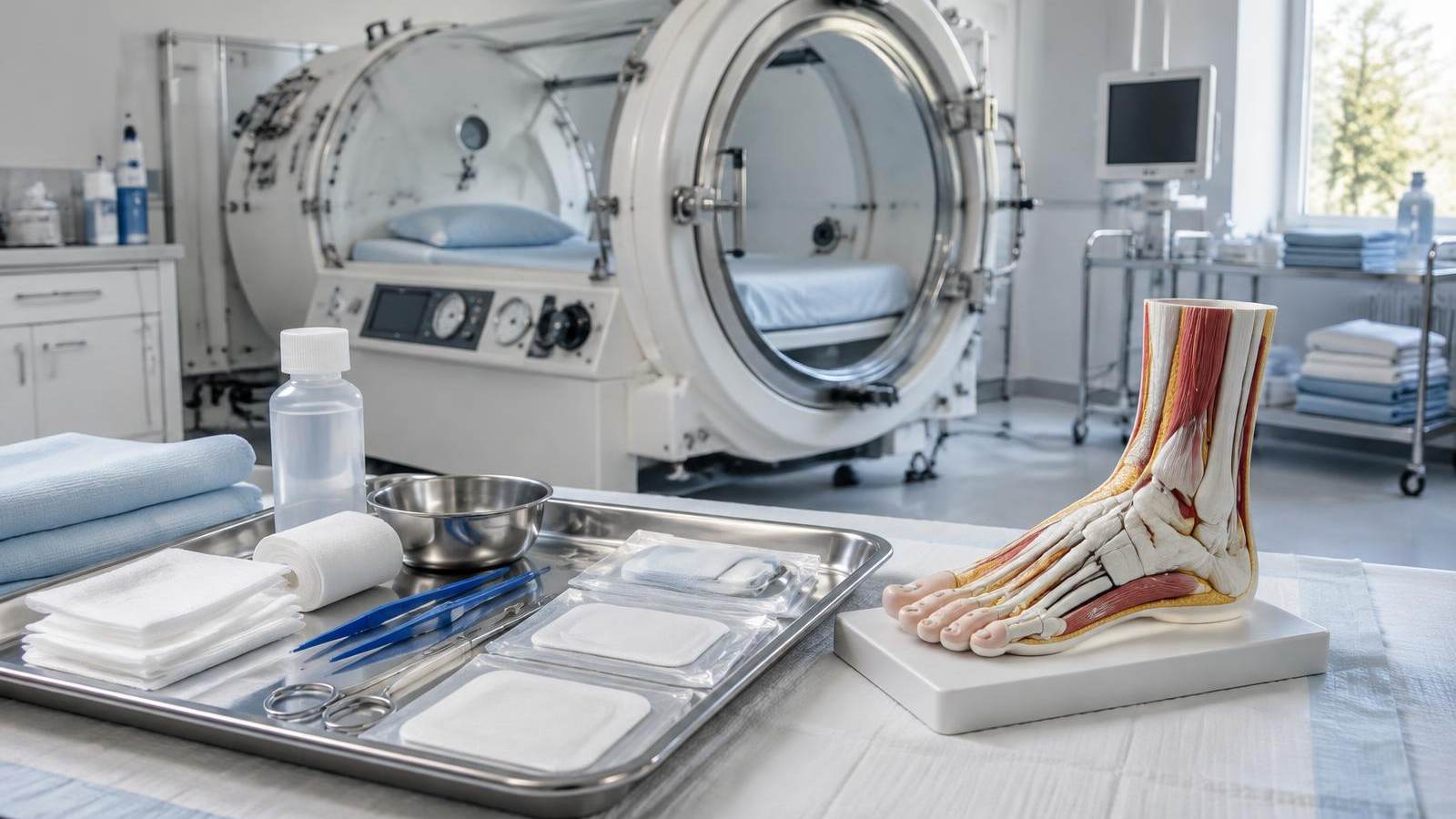
Hyperbaric oxygen cannot compensate for missing basics. Wound specialists remove dead tissue when appropriate, select dressings that manage moisture, culture suspected infection and prescribe antibiotics when indicated. Pressure must be taken off the area with footwear, a boot or a cast. Blood sugar, nutrition and smoking status directly affect healing.
Circulation is checked early because an ulcer cannot heal without blood supply. If a major artery is narrowed or blocked, vascular imaging and possible revascularisation come before adjunctive therapy. Our guide to poor circulation in the legs explains the warning signs, while our diabetes article covers why standard metabolic care remains central.
A wound plan should record its site, length, width, depth, tissue type and photographs taken under consistent conditions. Without a baseline, neither HBOT nor any other addition can be judged honestly.
How Hyperbaric Oxygen Therapy Supports Wound Healing
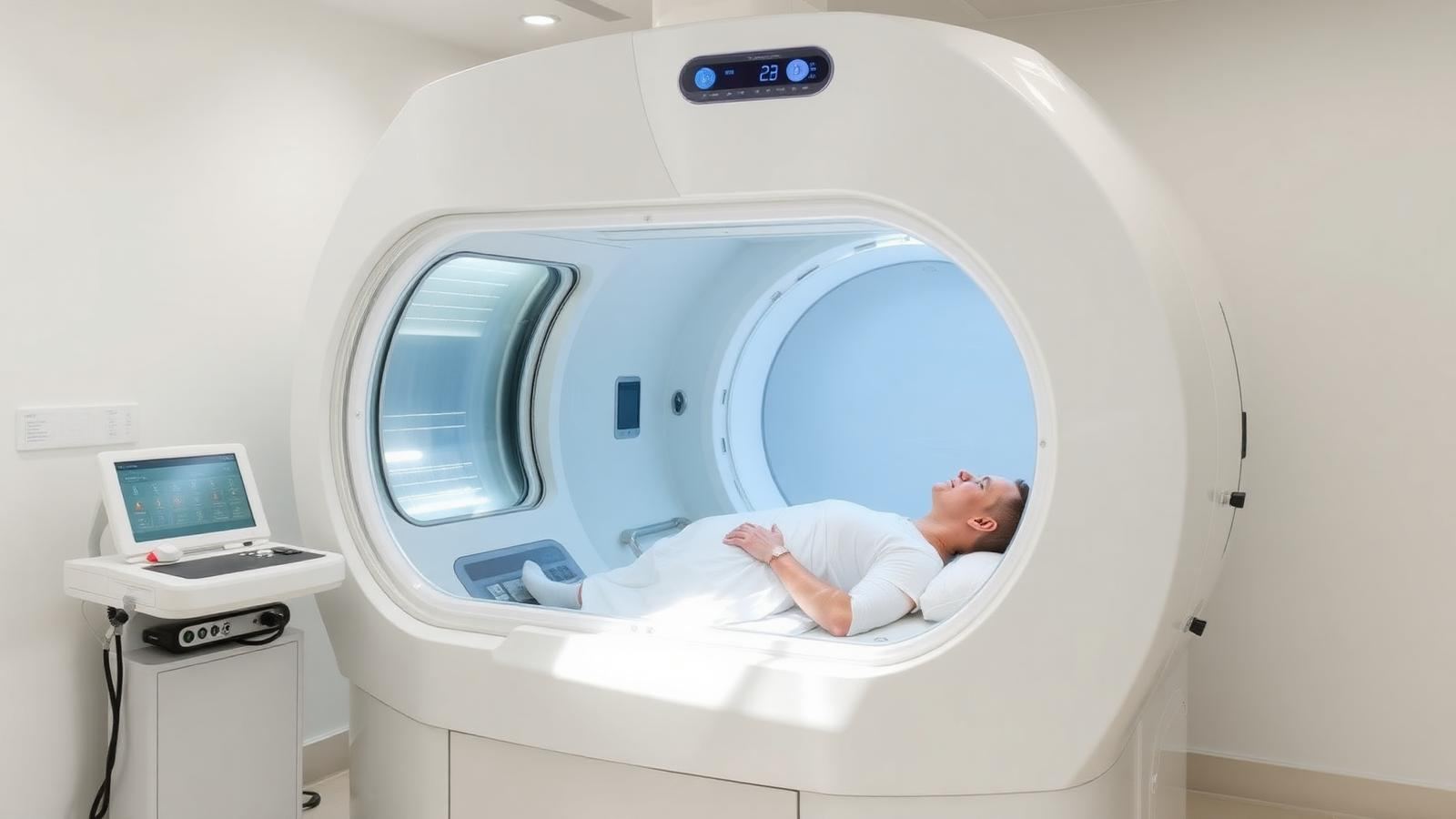
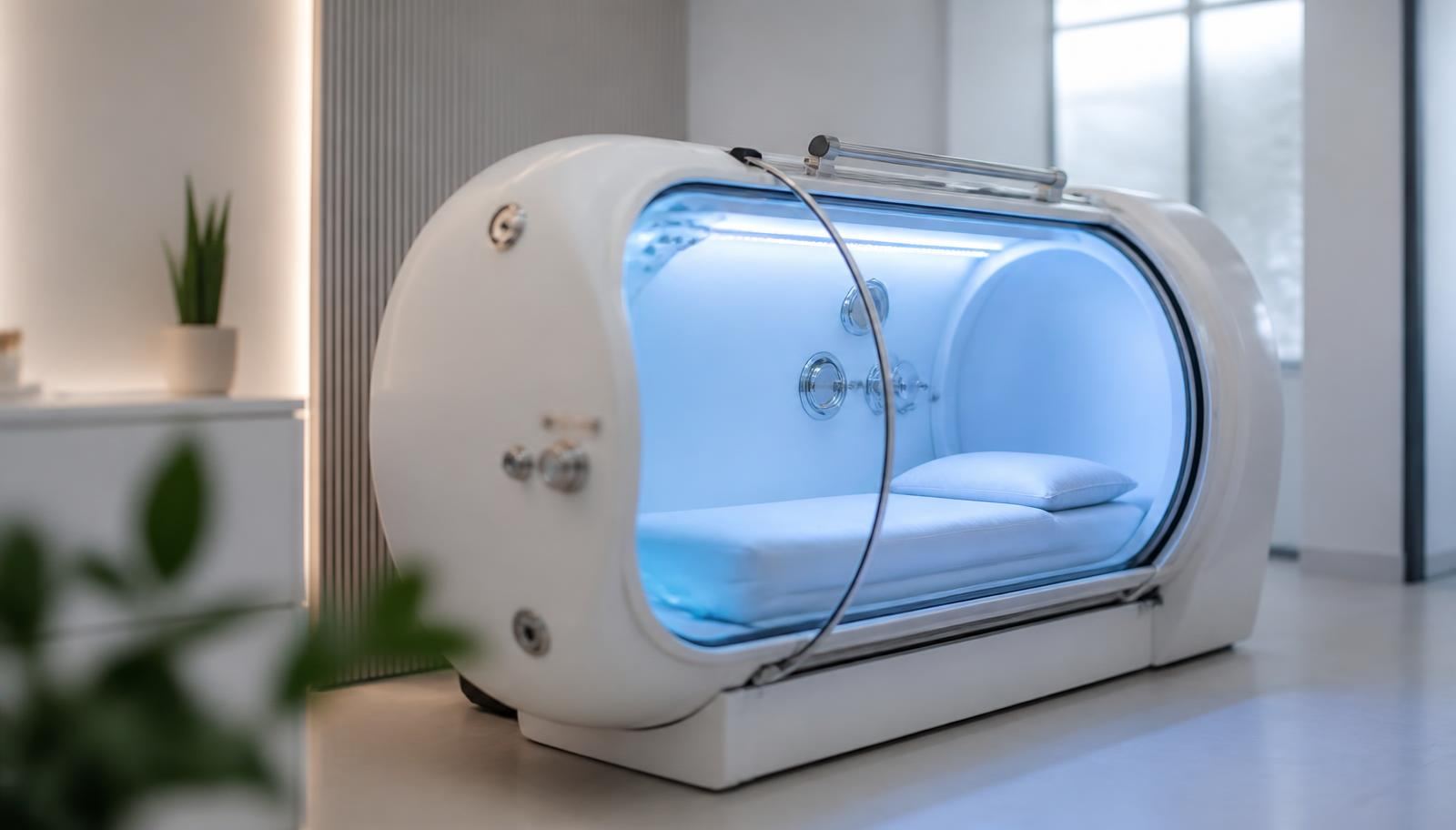
During HBOT, the patient breathes high-concentration oxygen inside a chamber pressurised above normal atmospheric pressure. This dissolves more oxygen into blood plasma, allowing oxygen to reach some poorly perfused tissue beyond what haemoglobin alone can deliver. In selected wounds, that supports white-cell bacterial killing, collagen-related repair and the formation of new small blood vessels over repeated sessions.
Evidence and guideline support are strongest for selected deeper diabetic lower-extremity wounds that have not improved with good standard care, especially when tissue oxygen is low. HBOT is not recommended simply because a patient has diabetes or because a wound exists. Severity, blood flow, infection control and response to initial treatment determine whether it is appropriate.
Wound protocols typically involve sessions on weekdays over several weeks, with regular measurement. The physiology and chamber standards are explained in our HBOT benefits guide, and the practical session experience is covered in what happens during HBOT.
HBOT, Circulation Care and Stem Cell Therapy Compared
| Part of care | What it addresses | Place in treatment |
|---|---|---|
| Debridement, dressings and offloading | Dead tissue, moisture balance and repeated pressure | Essential foundation for every appropriate wound |
| Antibiotics and surgical infection control | Soft-tissue or bone infection | Urgent when infection is present |
| Vascular treatment | Blocked arteries limiting blood flow | Must be addressed when circulation is inadequate |
| HBOT | Low tissue oxygen in selected difficult wounds | Established adjunct for defined wound categories |
| Stem cell therapy | Investigational support for vessel growth and tissue signalling | Research-stage addition, not standard wound care |
Stem cell therapy is being studied for difficult diabetic wounds because mesenchymal cells release signals involved in inflammation, blood-vessel formation and tissue repair. Early trials and reviews report potential, but preparation methods and patient groups vary, and it is not an established substitute for revascularisation, infection control, offloading or HBOT when HBOT is indicated.
In practice, these approaches are not interchangeable. The wound team first fixes what is fixable, then considers adjuncts based on documented oxygenation, wound severity and response. An option should be removed from the plan when its medical indication is absent.
How Wound Support Works at Our Bangkok Facility
At MRC Healthcare, a chronic wound is reviewed as a medical condition, not as an automatic chamber booking. The physician reviews diabetes control, medications, infection history, vascular findings and wound-care notes. The wound is measured and photographed, and hospital or vascular referral takes priority when urgent treatment is needed.
When HBOT is appropriate, ear, sinus and lung risks are assessed first. Sessions are delivered in a clinical chamber under medical supervision, with pressure, duration and course recorded. Wound measurements and tissue appearance are reviewed during the course so a lack of progress prompts reassessment rather than automatic continuation.
Any discussion of cell therapy is separate and evidence-led. It includes product documentation, candidacy and the fact that wound-specific use remains investigational. Our hyperbaric oxygen therapy page outlines the facility treatment pathway.
Planning a Wound-Care Visit to Thailand
A chronic wound is not suited to rushed medical tourism. Send recent wound photographs, vascular reports, blood results, culture results and a medication list before travel. The team needs to know whether infection is controlled, whether blood flow is adequate and whether you can safely continue pressure offloading during the journey.
HBOT wound protocols usually require weekday sessions over several weeks, so accommodation, transport and dressing changes must be planned around them. Long flights add swelling and pressure risks. Arrange mobility assistance if needed and keep dressings, medications and glucose supplies in hand luggage.
Before returning home, obtain a written summary, wound measurements and the next dressing and review dates for your local team. Our Thailand medical travel checklist covers the wider documents and travel preparation.
Selected Evidence
- Undersea and Hyperbaric Medical Society guidance on accepted hyperbaric oxygen indications.
- International Working Group on the Diabetic Foot guidance on wound healing interventions.
- Peer-reviewed systematic reviews of HBOT and investigational cell-based therapy for diabetic foot ulcers.
Ask Whether HBOT Belongs in Your Wound Plan
Share your wound records, photographs and circulation reports. Our physicians will explain whether HBOT, further vascular assessment, stem cell therapy research or another step is medically appropriate.
Schedule a Consultation