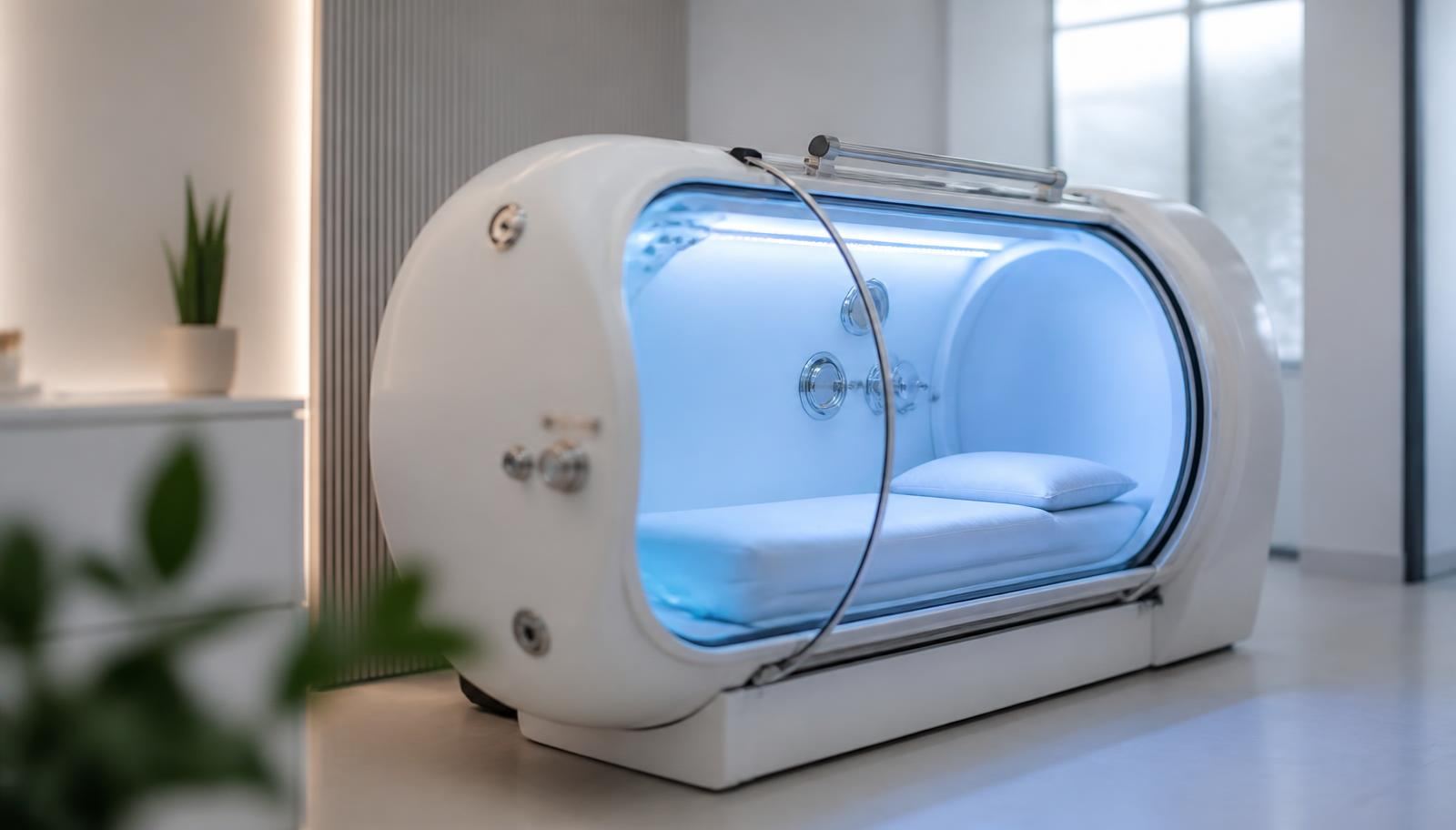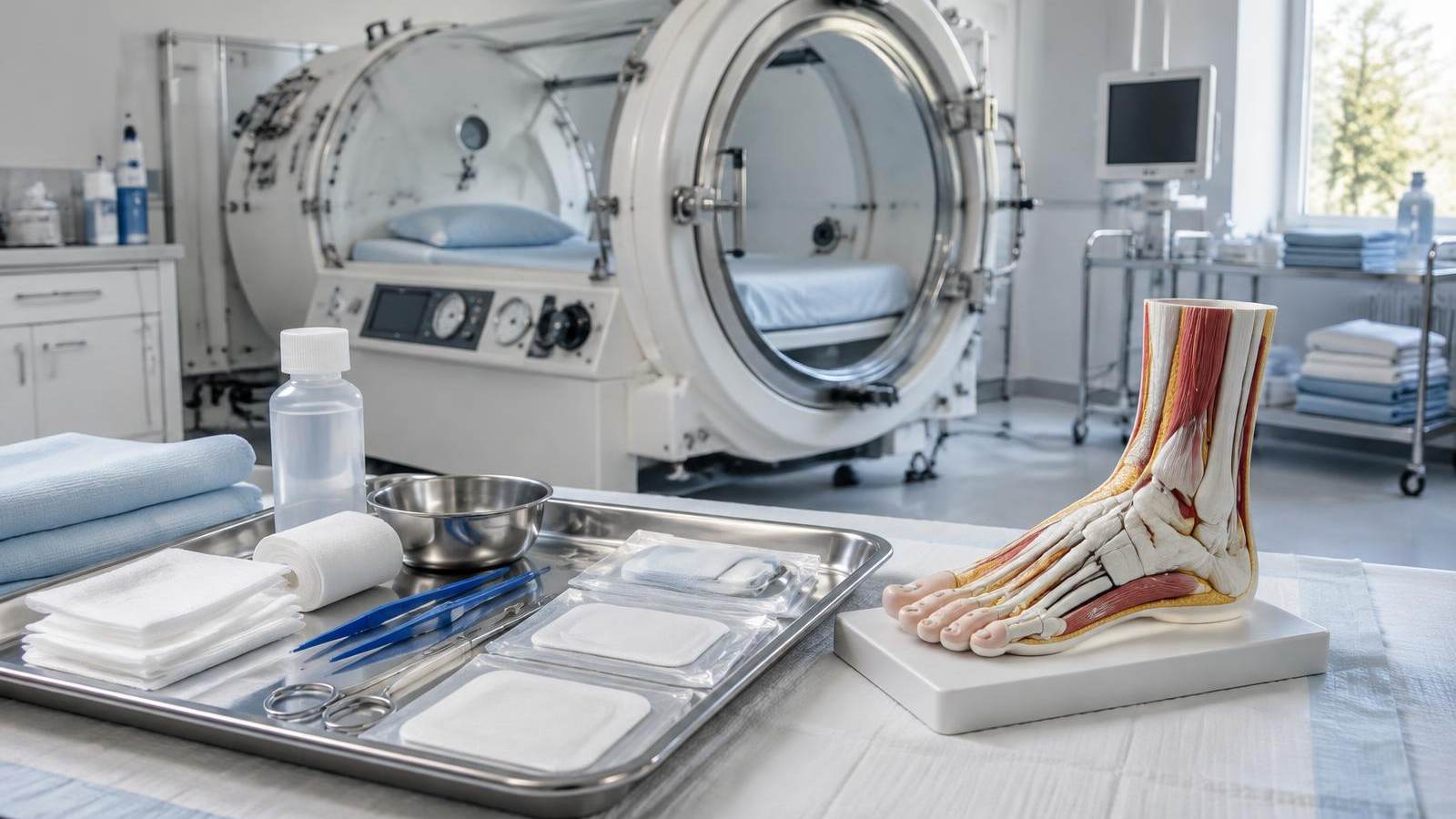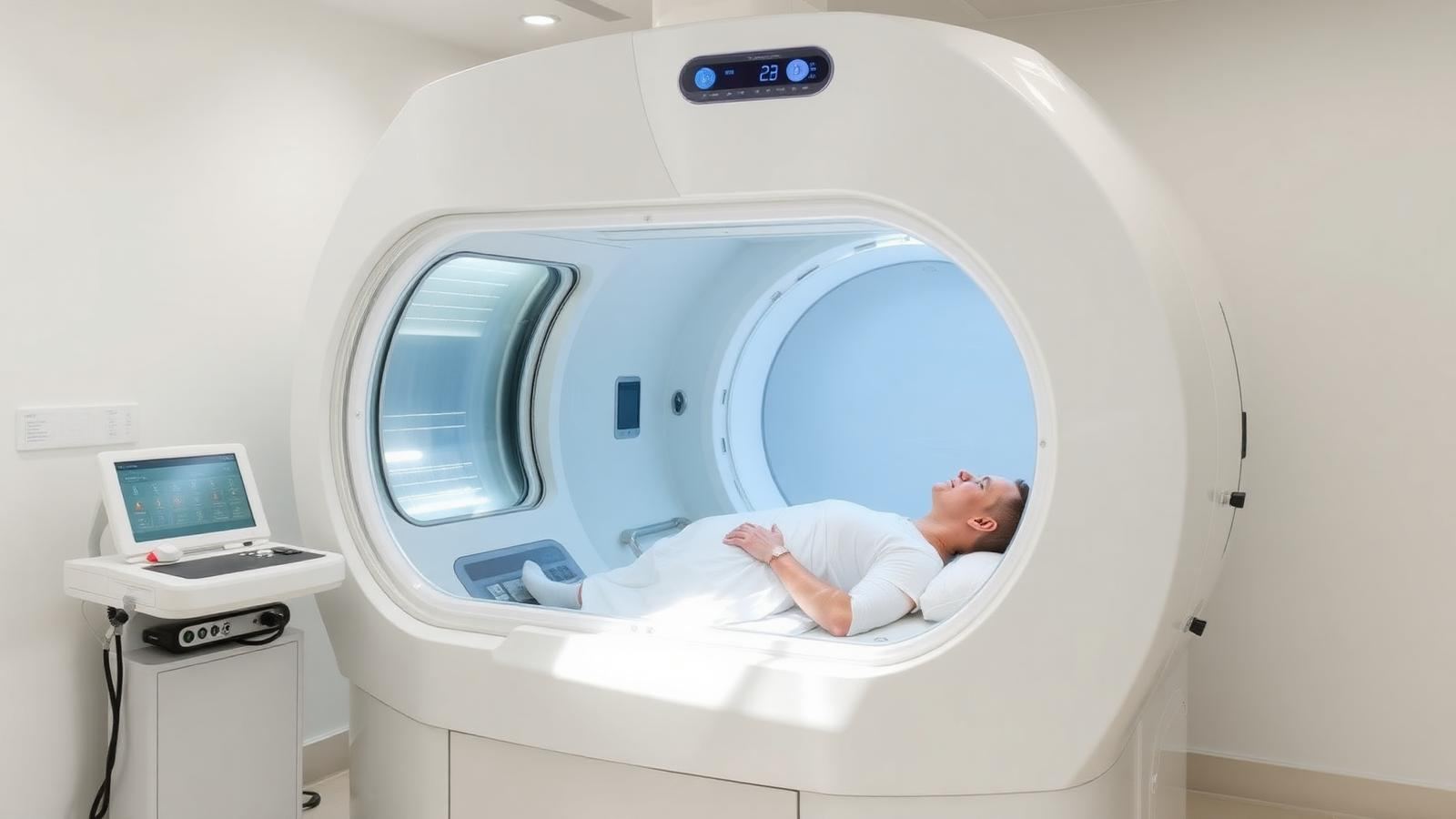
Hyperbaric oxygen therapy looks dramatic from the outside — a sealed chamber, a control console, a technician watching a screen. From the inside it is one of the least eventful treatments in medicine: you lie down, your ears pop, and you breathe. Here is exactly what a session involves at MRC Healthcare in Bangkok.
What Hyperbaric Oxygen Therapy Is
HBOT means breathing oxygen at greater than normal atmospheric pressure inside a sealed chamber. The core elements are simple:
- A pressure-rated chamber, either single-person or multi-person
- A controlled increase in pressure above sea level
- A high concentration of oxygen delivered for a set period
- Continuous monitoring by a trained operator throughout
It is an established hospital therapy for specific medical indications, and is used in clinic settings as a supportive therapy alongside other care. Full detail is on our hyperbaric oxygen therapy page.
How the Pressure Effect Works
Normally almost all the oxygen you carry is bound to haemoglobin in red blood cells, which are close to fully loaded already. Raising the pressure changes that:
- Dissolved oxygen rises sharply — much more oxygen dissolves directly into the blood plasma
- Plasma reaches further — plasma can carry oxygen into tissue where circulation is restricted
- Healing processes are supported — oxygen is a requirement for wound repair and new blood vessel formation
That is the whole mechanism: not a mysterious energy effect, but straightforward gas physics applied to physiology.
A Session, Minute by Minute
| Stage | Time | What happens |
|---|---|---|
| Preparation | 10 min | Change into cotton clothing; lighters, electronics and flammable products are left outside for fire safety |
| Pressurisation | 10–15 min | Pressure rises gradually; you clear your ears by swallowing or yawning, as on a descending flight |
| Treatment | 60–90 min | You rest at treatment pressure breathing oxygen; reading, audio or sleeping are all fine |
| Depressurisation | 10–15 min | Pressure returns to normal slowly; ears may pop again, then you leave the chamber |
An operator remains in contact with you for the entire session through an intercom, and sessions can be paused if you are uncomfortable at any point.
What It Actually Feels Like
- Ear pressure during pressurisation — the most noticeable sensation, easily cleared
- A brief warm feeling as the pressure rises, then a return to normal temperature
- No pain, no injections, no needles
- Some tiredness afterwards in some patients; others feel unchanged
- Occasional temporary changes in near vision over a long course, which typically settle after treatment ends
If you find enclosed spaces difficult, say so before booking — chamber type and session approach can be discussed, and it is better addressed in advance than in the chamber.
Hyperbaric Oxygen Therapy Course Structure and Safety
HBOT effects are cumulative, so it is planned as a course:
- The number of sessions is set by indication and physician assessment
- Sessions are usually scheduled on consecutive or near-consecutive days
- Progress is reviewed during the course, not only at the end
- For international patients the schedule is condensed sensibly into the trip length
Safety is managed through assessment and chamber protocol. Before a first session a physician checks for untreated pneumothorax, relevant lung disease, recent ear surgery, fever, certain chemotherapy agents, and claustrophobia. Inside the chamber, strict fire safety rules apply — no electronics, lighters, oils or flammable cosmetics.
HBOT is often planned alongside other supportive therapies, including ozone therapy and IV nutrient support, within a single physician-supervised plan.
Hyperbaric Oxygen Therapy in Bangkok
Bangkok is a practical place to complete a course of sessions, for reasons that are mostly logistical:
- Chamber availability that allows daily sessions over a compressed schedule
- Physician-led assessment before the course begins
- English-speaking teams experienced with international patients
- Accommodation and transport that make daily attendance straightforward
Wider context on Thai clinical oversight is in our overview of Thailand's healthcare standards, and travel logistics are covered in our medical travel checklist.
Ask Whether HBOT Fits Your Case
Our medical team will assess your history, explain what hyperbaric oxygen therapy can realistically support, and set out a session schedule that fits your stay.
Schedule a Consultation