Hyperbaric oxygen therapy sits in an unusual position: it is a genuinely established hospital treatment for a defined list of conditions, and simultaneously one of the most over-marketed therapies in the wellness sector. Reading it accurately means sorting uses into three tiers — established, supportive, and unsupported.
Established Medical Uses of Hyperbaric Oxygen Therapy
These are the indications where HBOT is a recognised medical treatment with a substantial evidence base, typically delivered in hospital settings:
- Decompression sickness in divers
- Carbon monoxide poisoning
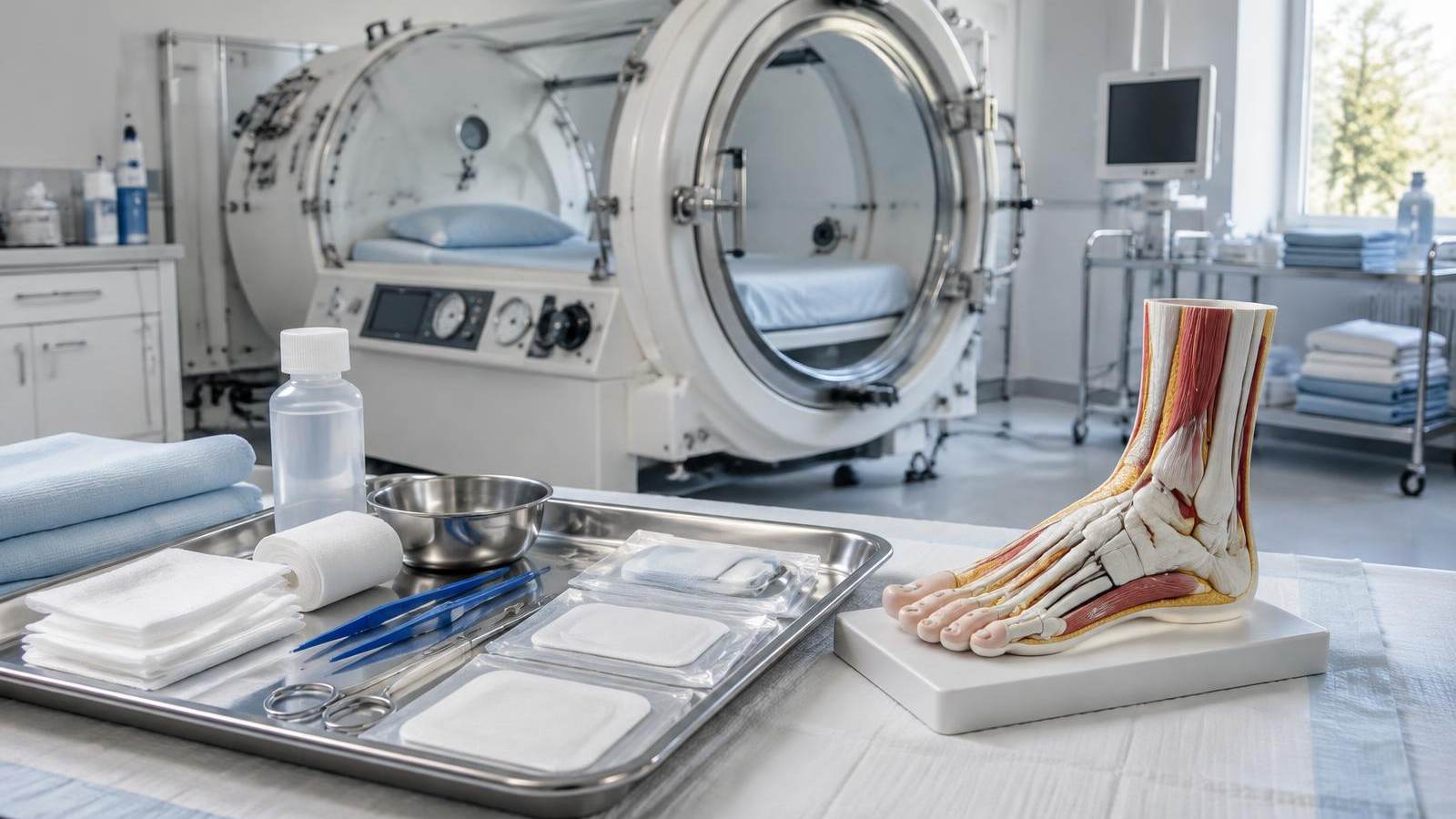
- Non-healing wounds, notably diabetic foot ulcers that have failed standard care
- Late radiation tissue injury following cancer treatment
- Certain severe soft-tissue infections and compromised skin grafts
The shared logic across all of these is the same: a tissue problem that is limited by oxygen availability, in which raising dissolved oxygen has a clear physiological rationale.
Supportive Uses in Clinic Settings
Outside the established list, HBOT is used as supportive care where the oxygen rationale is plausible but the evidence is still developing:
| Use | Rationale | Evidence status |
|---|---|---|
| Post-surgical and injury recovery | Oxygen supply supports tissue repair | Developing; used case by case |
| Chronic inflammatory conditions | Possible effect on inflammatory signalling | Limited and mixed |
| Fatigue and general recovery | Patient-reported energy improvement | Limited; expectations must stay realistic |
| Alongside regenerative therapy | Tissue oxygenation as a supportive factor | Investigational; planned by a physician |
Used this way, HBOT is one component of a plan — often scheduled alongside mesenchymal stem cell therapy or ozone therapy — rather than a treatment sold on its own promises. The practical side of a session is described in our step-by-step HBOT session guide.
What the Evidence Does Not Support
Being clear about this protects patients more than any marketing claim ever will. HBOT is not an evidence-based treatment for:
- Cancer treatment or "starving" tumours
- Reversing ageing, or as a proven longevity intervention
- Curing neurological conditions
- Replacing conventional treatment for any diagnosed disease
It is also worth knowing that an oxygen bar or a home concentrator is not a substitute for, or a version of, HBOT. Without pressure, the mechanism that makes hyperbaric therapy work simply does not occur.
Who Is a Candidate for Hyperbaric Oxygen Therapy
Candidacy is decided by assessment, not by request. A physician reviews:
- The indication — whether an oxygen-limited problem is actually present
- Lung and ear health — untreated pneumothorax rules HBOT out; some lung conditions and recent ear surgery need caution
- Medication — certain chemotherapy agents are incompatible
- Practicality — whether you can complete a full course, and whether enclosed spaces are manageable for you
A course that cannot be completed is rarely worth starting, which is why scheduling is part of the clinical decision — particularly for patients travelling from abroad.
Questions to Ask Before Booking
- What specifically are you treating in my case, and what is the rationale?
- Is this an established indication or supportive care with developing evidence?
- How many sessions, at what pressure, and who supervises them?
- What would tell us it is not working, and when would we stop?
Clear answers to those four questions distinguish a clinical programme from a package. At MRC Healthcare, hyperbaric oxygen therapy is planned as supportive care with a defined rationale and review point — details on our HBOT page.
Get an Honest Assessment
Our physicians will tell you whether hyperbaric oxygen therapy has a defensible role in your case — including when it does not — and how it would fit a wider plan.
Schedule a ConsultationRelated reading: which HBOT benefits are well supported and what to check before booking a chamber in Bangkok.