Chest tightness on a flight of stairs, breathlessness that arrives earlier than it used to, legs that tire quickly on a short walk. These are circulation symptoms, and they deserve a cardiac assessment before any treatment is considered. This article explains where EECP therapy fits once that assessment is done, what the evidence supports, and how a course is run in Bangkok.
Chest Tightness and Leg Fatigue: When Circulation Is the Problem
Reduced blood flow to the heart muscle produces a recognisable pattern. Discomfort appears with exertion, emotion or cold, sits centrally in the chest rather than in one small spot, and eases with rest within a few minutes. It may radiate to the jaw, neck or left arm. Some people never feel chest pain at all and notice only unusual breathlessness or fatigue, which is more common in women and in people with diabetes.
- Predictable chest tightness at a similar level of effort each time
- Breathlessness that is new, or worse at the same activity as six months ago
- Cramping calf pain after a set walking distance, easing on standing still
- Cold feet, slow-healing skin on the lower leg, or hair loss on the shins
- Reduced exercise tolerance despite optimal medication
Chest pain that is new, occurs at rest, lasts more than a few minutes or comes with sweating and nausea is an emergency, not a clinic appointment. Call emergency services. Leg circulation symptoms specifically are covered in our article on poor circulation in the legs.
What EECP Therapy Does to Blood Flow
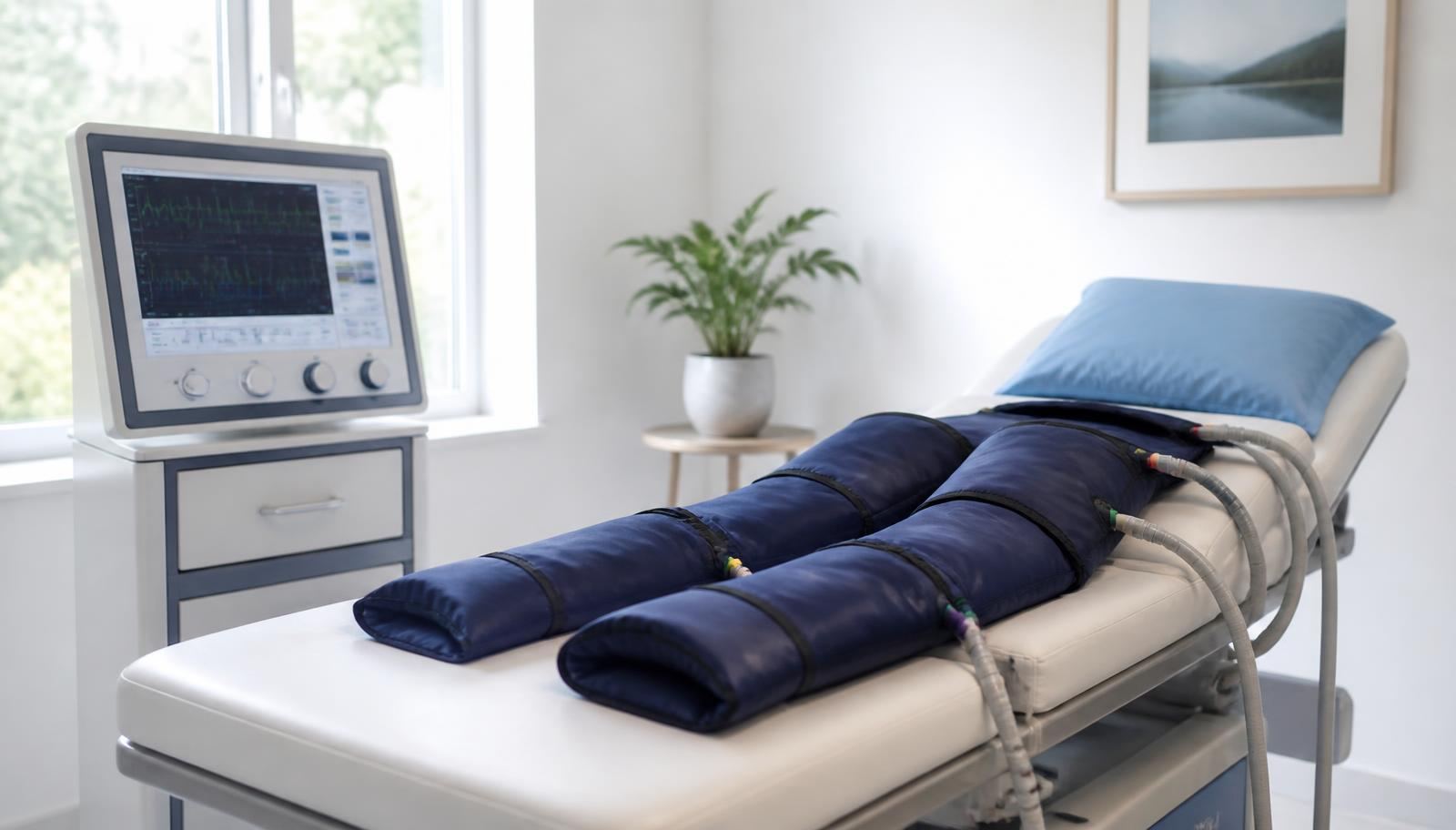
Enhanced external counterpulsation is a non-invasive, non-drug treatment. Three sets of pneumatic cuffs are fitted to the calves, lower thighs and upper thighs including the buttocks. An ECG trace drives the timing. During diastole, when the heart muscle relaxes and the coronary arteries actually fill, the cuffs inflate in sequence from the calves upwards, pushing venous blood back towards the chest and raising diastolic pressure. Immediately before the next contraction all cuffs deflate at once, briefly reducing the pressure the heart must pump against.
Two effects are proposed. The immediate one is mechanical: better coronary filling pressure and reduced cardiac workload during each beat. The slower one is biological, with repeated increases in shear stress along the vessel wall thought to improve endothelial function and encourage collateral flow over a full course. The second mechanism is why a single session means little and why the protocol is counted in weeks.
What the Evidence Shows for EECP Therapy
| Use | What has been studied | Evidence maturity |
|---|---|---|
| Refractory stable angina | Randomised sham-controlled trial and long-term registry follow-up reporting reduced angina frequency and improved exercise time | Strongest indication; basis for regulatory clearance |
| Stable chronic heart failure | Trial data on exercise duration and quality of life in selected patients | Moderate, in carefully selected and stable patients |
| Endothelial function | Mechanistic studies of shear stress and vascular response | Mechanistic support rather than outcome data |
| General wellness or fatigue | Little controlled evidence | Not an established indication; treat claims with caution |
References worth reading: Arora and colleagues, Journal of the American College of Cardiology 1999, the MUST-EECP randomised trial; Feldman and colleagues, Journal of the American College of Cardiology 2006, the PEECH trial in heart failure; and the International EECP Patient Registry follow-up reports. Newer reviews continue to describe symptom and exercise-capacity benefit without claiming mortality benefit.
Who EECP Therapy Suits and Who It Does Not
The clearest candidate is someone with stable angina who still has symptoms on optimal medication, and for whom further stenting or bypass is either unsuitable or already exhausted. Stable heart failure patients are considered individually. EECP is not a substitute for statins, antiplatelet therapy, blood pressure control or stopping smoking, and no reputable programme will suggest reducing cardiac medication because a course is planned.
- Exclusions include severe aortic regurgitation and aortic aneurysm
- Active deep vein thrombosis or recent lower limb thrombosis excludes treatment
- Severe peripheral arterial disease in the legs usually excludes cuff use
- Arrhythmia that prevents reliable ECG triggering must be controlled first
- Uncontrolled hypertension is corrected before a course begins
How EECP Therapy Is Delivered at Our Bangkok Facility
At MRC Healthcare every EECP candidate has a physician consultation first, with a medication review, blood pressure assessment, ECG and a review of any recent echocardiogram, angiogram or stress test. Where leg circulation is in question, an ankle brachial index test is performed before cuffs are fitted. Baseline walking tolerance and angina frequency are written down so the end of the course can be compared with something objective rather than memory.
Sessions run for one hour with continuous ECG and blood pressure monitoring and trained staff present throughout. Cuff pressure is set individually and recorded. Full details of the service are on our EECP therapy page, and related cardiovascular care is described under vascular treatment.
Planning an EECP Course From Overseas
Because benefit depends on completing a course, trip length is the first practical question. A standard schedule of one session each weekday needs roughly seven weeks in Bangkok. A twice-daily schedule shortens the stay but is only offered when the baseline assessment supports it. Decide this before booking flights rather than after arrival.
Bring a current medication list, your most recent ECG, echocardiogram report and any angiogram or stress test results. Ask for a written discharge summary at the end so your cardiologist at home can continue care without guesswork. General preparation is covered in our Thailand medical travel checklist, and atrial rhythm questions are discussed in our article on atrial fibrillation.
Ask Whether EECP Therapy Fits Your Heart Condition
Send your recent cardiac reports and our physicians will tell you honestly whether EECP is appropriate, what schedule would be needed and how progress would be measured.
Schedule a Consultation