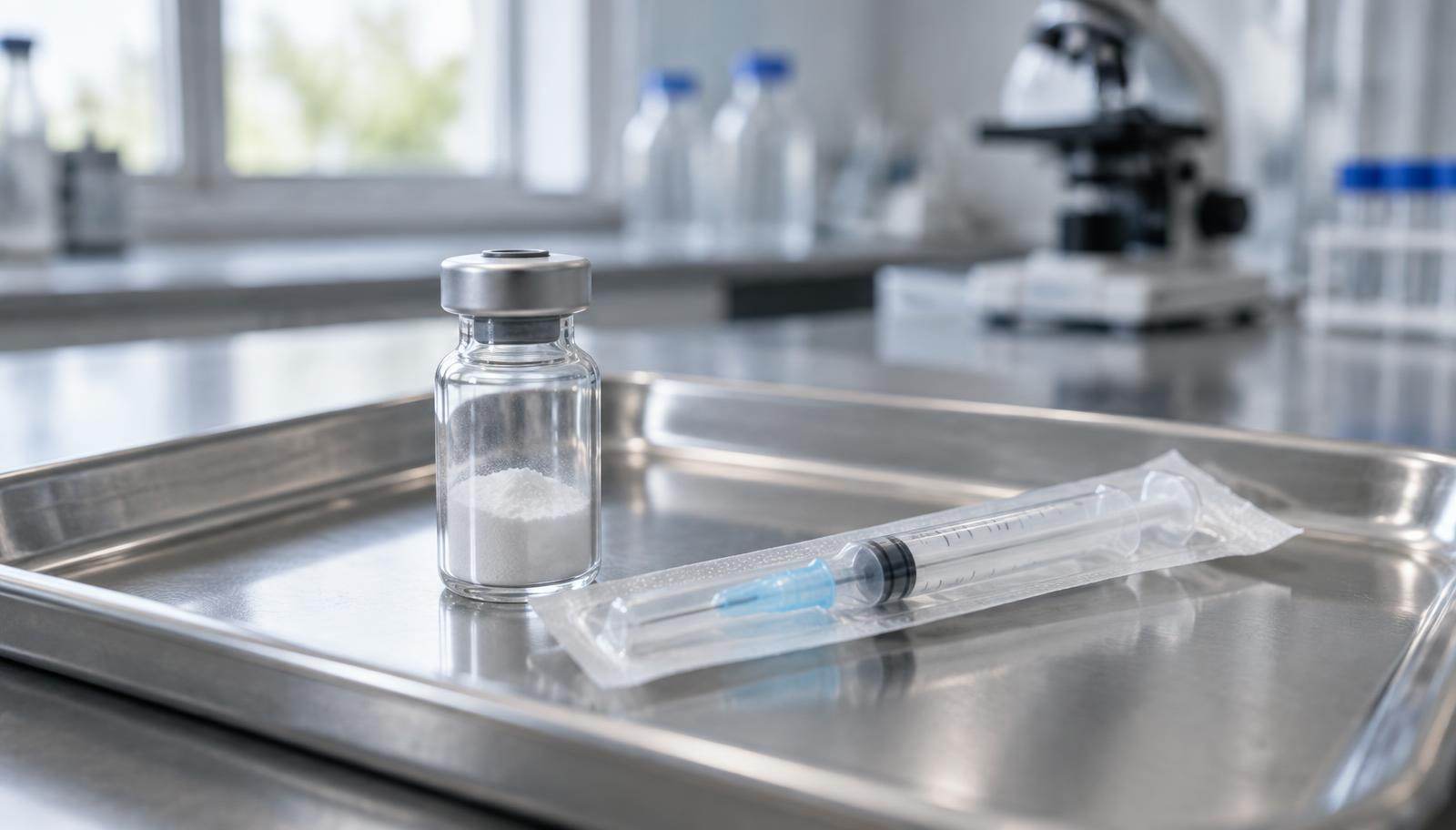
Exosomes are nanoscale, membrane-bound packages released by cells. They contain selected proteins, lipids and genetic messages that can influence how recipient cells behave. Their origin and manufacturing process matter because the word “exosome” alone does not establish what is in a vial, how pure it is or whether it has measurable activity.
What Are Exosomes?
Exosomes are one class within the broader family of extracellular vesicles. Cells form them inside compartments called multivesicular bodies. When those compartments fuse with the cell membrane, the vesicles are released into the surrounding fluid. Many exosomes measure roughly 30 to 150 nanometres, although size alone cannot prove identity.
Their lipid membrane protects biological cargo while it travels between cells. When a vesicle reaches another cell, it may bind to the surface, merge with the membrane or be taken inside. Its cargo can then influence signalling pathways. This is why exosomes are often called cellular messages, though the real biology is more selective than a simple parcel analogy.
Our original introduction to what exosomes are and how they work explains the general mechanism. This guide focuses specifically on composition, origin and laboratory quality.
What Exosomes Are Made Of
The outer membrane is a lipid bilayer rich in cholesterol, sphingomyelin and other lipids that support stability. Embedded and associated proteins help with membrane transport and cell recognition. Commonly studied proteins include tetraspanins CD9, CD63 and CD81, although these markers are not exclusive to exosomes.
Inside, exosomes may carry enzymes, signalling proteins, messenger RNA, microRNA and other nucleic-acid fragments. MicroRNAs can influence which proteins a recipient cell produces. The cargo is not random. It reflects the parent cell, its developmental state and its environment, including inflammation, oxygen tension and culture conditions.
This variability is scientifically useful but clinically important. A preparation from one cell source or manufacturing process cannot be assumed equivalent to another preparation merely because both are called exosomes.
What Are Exosomes Derived From?
Almost all cells release extracellular vesicles. Research has examined vesicles from immune cells, platelets, epithelial cells and mesenchymal stromal cells. In regenerative research, MSC-derived preparations receive particular attention because the parent cells produce signals associated with immune regulation and tissue-supporting pathways.
To produce a preparation, screened cells are expanded under defined conditions. The fluid in which the cells grow, called conditioned medium, is collected after a controlled period. Vesicles are then separated from that medium. Donor criteria, source tissue, culture media and the health of the parent cells all affect the result.
Patients should be able to ask whether a product is derived from human cells, which tissue was used, how donors were screened and whether animal-derived culture components were present. A clear answer supports traceability. For the role of parent cells, see our beginner’s guide to stem cells and clinical sources.
How Exosomes Are Isolated
Conditioned medium contains proteins, cell fragments and different sizes of extracellular vesicle. Isolation aims to enrich the intended vesicles while reducing contaminants. Methods include differential ultracentrifugation, size-exclusion chromatography, filtration, precipitation and combinations of these techniques.
Each method has trade-offs. Ultracentrifugation is widely used in research but can aggregate vesicles or co-isolate proteins. Size-exclusion methods separate by size and may preserve structure, but purity depends on the complete workflow. Precipitation can provide high apparent yield while bringing more non-vesicle material into the sample.
After isolation, the preparation must be formulated, stored and transported under validated conditions. Repeated freezing and thawing can alter vesicle integrity. A manufacturer should therefore define storage temperature, shelf life and handling after thawing.
How Exosome Quality and Purity Are Tested
| Check | What it measures | Why it matters |
|---|---|---|
| Particle size and count | Distribution and concentration | Confirms consistency, not identity alone |
| Marker profile | Vesicle-associated and negative markers | Supports characterisation and contamination control |
| Morphology | Vesicle appearance by imaging | Provides orthogonal confirmation |
| Purity ratio | Particles relative to protein or contaminants | Distinguishes yield from cleaner enrichment |
| Sterility and endotoxin | Microbial and pyrogen contamination | Essential before clinical administration |
| Potency assay | A relevant biological effect | Connects the product with intended activity |
The International Society for Extracellular Vesicles recommends using several complementary methods because no single marker or instrument proves that a sample contains pure, functional exosomes.
Why Exosome Particle Count Is Not Enough
A headline number in billions may sound precise, but particle counters can detect other vesicles and non-vesicular material. A larger number does not automatically mean a cleaner preparation, a higher dose of active cargo or a stronger clinical effect. Measurement platforms also differ, so results from separate laboratories may not be directly comparable.
Useful documentation places concentration beside particle size distribution, protein content, marker results, sterility and an appropriate potency test. It should also state the administered volume and route. This makes the dose interpretable rather than promotional.
The same principle applies when comparing exosomes with stem cell preparations. Product identity, indication and evidence matter more than choosing the largest number on a brochure.
From Laboratory Product to Clinical Decision
Exosome research is active in musculoskeletal, skin, hair and other fields, but the evidence and regulatory status vary by indication and jurisdiction. A plausible laboratory mechanism does not establish that every product or route improves a clinical outcome. The physician should explain whether the proposed use is established, emerging or investigational.
At MRC Healthcare, a discussion begins with diagnosis and candidacy. Product records, intended route, monitoring and realistic treatment goals should form one documented plan. International patients can share records before travelling to Bangkok so unsuitable options can be identified early.
For administration routes and what happens during treatment, read how exosome injections work and our guide to exosome therapy standards in Bangkok.
Medical References
- Théry C, et al. MISEV2018: Minimal information for studies of extracellular vesicles. Journal of Extracellular Vesicles.
- Welsh JA, et al. MISEV2023: Updated guidance for extracellular vesicle research. Journal of Extracellular Vesicles.
- International Society for Extracellular Vesicles. Position and rigour resources for clinical translation.
- U.S. Food and Drug Administration. Public safety notification on unapproved exosome products.
Ask What Is Actually in the Exosome Preparation
Our medical team can review the source, characterisation, quality records and clinical rationale with you before any treatment decision.
Schedule a Consultation