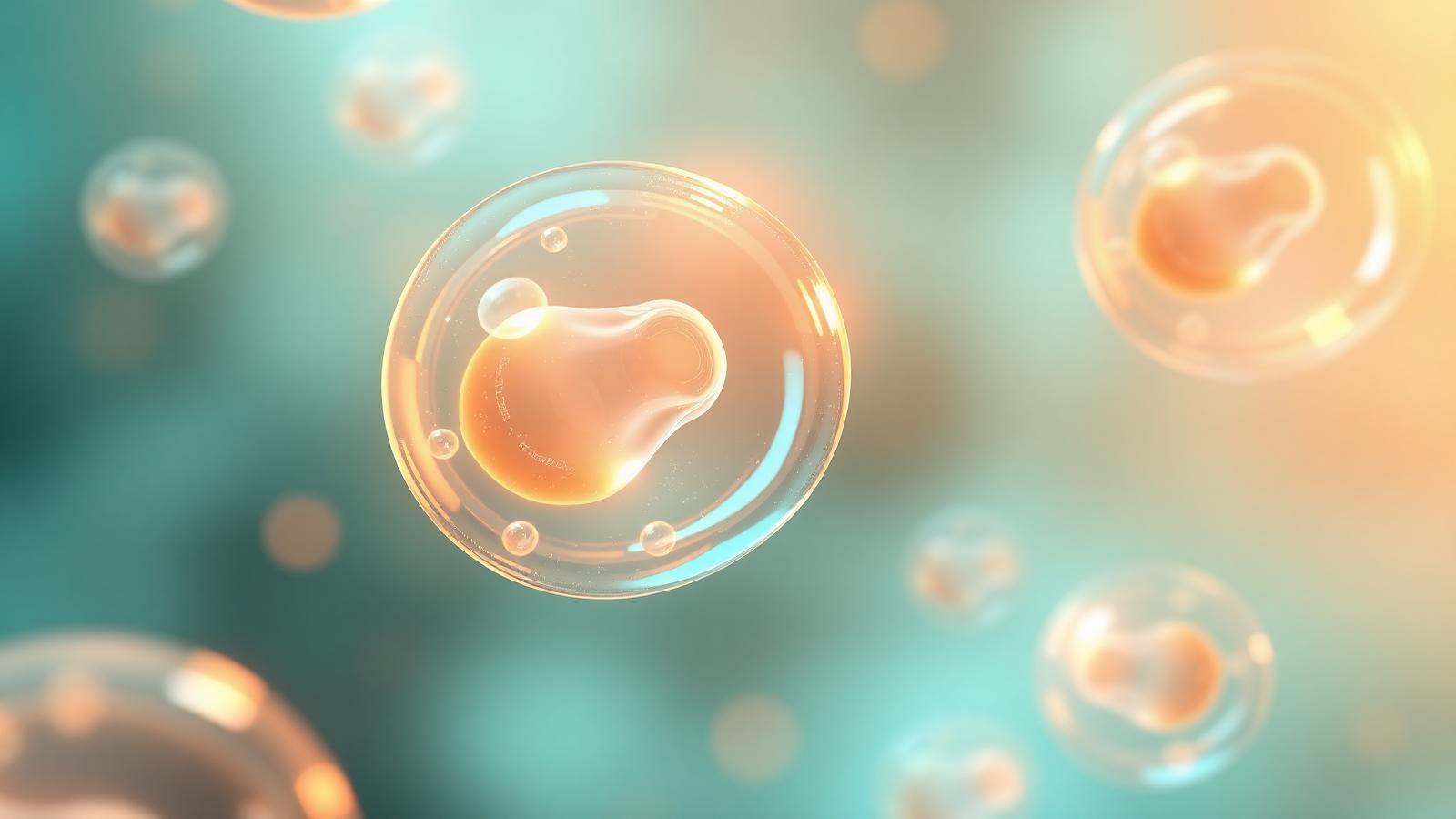
"Stem cells" is one of those phrases that turns up everywhere and gets explained almost nowhere. The good news is that the underlying biology is genuinely approachable. This guide starts from zero — no background required — and walks through what a stem cell actually is, the main types scientists work with, and why the differences between them matter.
What Makes a Stem Cell Different From Other Cells
Almost every cell in your body has a fixed job. A liver cell processes what passes through it; a muscle cell contracts. They are specialists, and once specialised they stay that way. Stem cells are the exception, and they are defined by two abilities that other cells lack:
- Self-renewal — they can divide and produce more stem cells, effectively maintaining their own supply rather than being used up
- Potency — they can develop into specialised cell types, a process biologists call differentiation
Potency comes in degrees, and this is the single most useful idea to hold on to:
- Pluripotent — can become almost any cell type in the body
- Multipotent — more restricted, generally producing cells related to the tissue family they belong to
Neither is "better" — they are suited to different purposes. The three categories you will encounter compare like this:
| Type | Potency | Main role today |
|---|---|---|
| Embryonic stem cells | Pluripotent | Research, under close ethical and regulatory oversight |
| Adult (somatic) stem cells | Multipotent | Essentially all real-world clinical application |
| Induced pluripotent stem cells (iPSCs) | Pluripotent | Research, disease modelling and drug development |
For a reliable plain-language reference maintained by scientists, the NIH's Stem Cell Basics is an excellent place to read further. Everything that follows builds on these two properties.
Embryonic Stem Cells
Embryonic stem cells come from the inner cell mass of a very early-stage embryo, at a point when the cells have not yet committed to becoming any particular tissue. The essentials:
- Classic pluripotency — given the right laboratory conditions they can be guided towards nerve cells, heart muscle cells, pancreatic cells and much else besides
- Scientific value — much of what researchers understand about how a single cell becomes an organ, and in what order the signals switch on, came from studying these cells in culture
- Closely governed — ethical frameworks and national regulation define what may be done with them and under what oversight
- Research, not routine care — their role today is overwhelmingly research-based
When you read about a stem cell therapy being offered at a clinic, embryonic cells are almost certainly not what is involved — which is why the next category matters so much.
Adult (Somatic) Stem Cells
Adult stem cells — also called somatic stem cells — exist throughout the body, quietly maintaining and repairing the tissues they live in. They are found in bone marrow, fat tissue, blood vessels, skin, and in umbilical cord tissue after birth. They are multipotent rather than pluripotent, meaning their range is narrower, but that narrower range is well characterised and practical to work with.
Two families dominate the clinical picture:
- Hematopoietic stem cells (HSCs) — the blood-forming cells used in bone marrow transplantation, an established medical procedure carried out for decades
- Mesenchymal stem cells (MSCs) — connective tissue cells studied for their signalling and immune-modulating properties, and the type most often referenced in regenerative medicine
If there is one takeaway from this section, it is this: adult stem cells account for essentially all real-world clinical application today. The long track record of bone marrow transplantation is a useful reminder that this field is not new — it has simply broadened.
Induced Pluripotent Stem Cells (iPSCs)
The third category is the most surprising one. In 2006, Japanese researcher Shinya Yamanaka showed that ordinary adult cells — a skin cell, for example — could be reprogrammed in the laboratory back into a pluripotent, embryonic-like state by introducing a small set of genetic factors. Cells that had already chosen a career, in effect, could be persuaded to start again.
The significance was recognised quickly: Yamanaka shared the 2012 Nobel Prize in Physiology or Medicine for the discovery. What it unlocked is considerable:
- Pluripotent cells can be generated without using embryos
- Cells can be derived from a specific person, matching their own biology
- Diseases can be modelled in a dish using cells that carry the relevant genetics
- New drugs can be screened against human cells earlier in development
iPSCs remain primarily a research and drug-development tool rather than a routine treatment, with clinical trials underway in several areas. They are worth knowing about because they represent where a great deal of the field's future work is heading.
Where MSCs Come From: Bone Marrow, Adipose Tissue, and Umbilical Cord
Because mesenchymal stem cells are the type most often used in regenerative medicine, it helps to know that "MSC" describes a family of cells rather than a single product. Where they are sourced from affects how many can be obtained and how readily they multiply in culture.
| Source | Notable characteristic |
|---|---|
| Bone marrow | The original and most extensively studied source, with the longest research history behind it |
| Adipose (fat) tissue | An abundant supply that is relatively accessible to collect |
| Umbilical cord tissue | Collected from screened donations after healthy births; noted for strong proliferative capacity |
None of these is universally superior — the choice depends on what is being treated, how many cells are needed and how the product is prepared. You can read more on our mesenchymal stem cell therapy page, and compare sources in more depth in our related article on UC-MSC vs autologous stem cells.
How Scientists and Clinicians Use This Knowledge Today
Understanding these categories turns a vague topic into a set of specific, answerable questions. Researchers choose a cell type to match a scientific question; clinicians choose one to match a clinical purpose. A patient reading about a treatment can do something similar — and ask better questions as a result:
- What type of cell is being used, and from what source?
- Is the product prepared in a licensed, quality-controlled laboratory?
- What does published research report for this cell type and this condition?
- How will the treatment be delivered, and who supervises it?
Those questions are reasonable, and any responsible provider should welcome them. They also shift the conversation from marketing language towards biology, which is where useful decisions get made.
If you would like to go a level deeper into how this science is applied in practice, read our clinical guide to stem cell therapy, or explore the conditions we treat to see where regenerative approaches are currently being applied.
Curious Which Options Are Relevant to You?
Our physicians are happy to talk through the science in plain language and explain which regenerative approaches, if any, relate to your own health goals.
Schedule a Consultation