COPD is one of the conditions most heavily marketed to by overseas cell therapy providers, often with language that the evidence does not support. This article sets out what happens in the COPD lung, what cell therapy is actually being studied for, who might reasonably be assessed in Thailand, and who should not travel at all.
What Is Actually Damaged in COPD
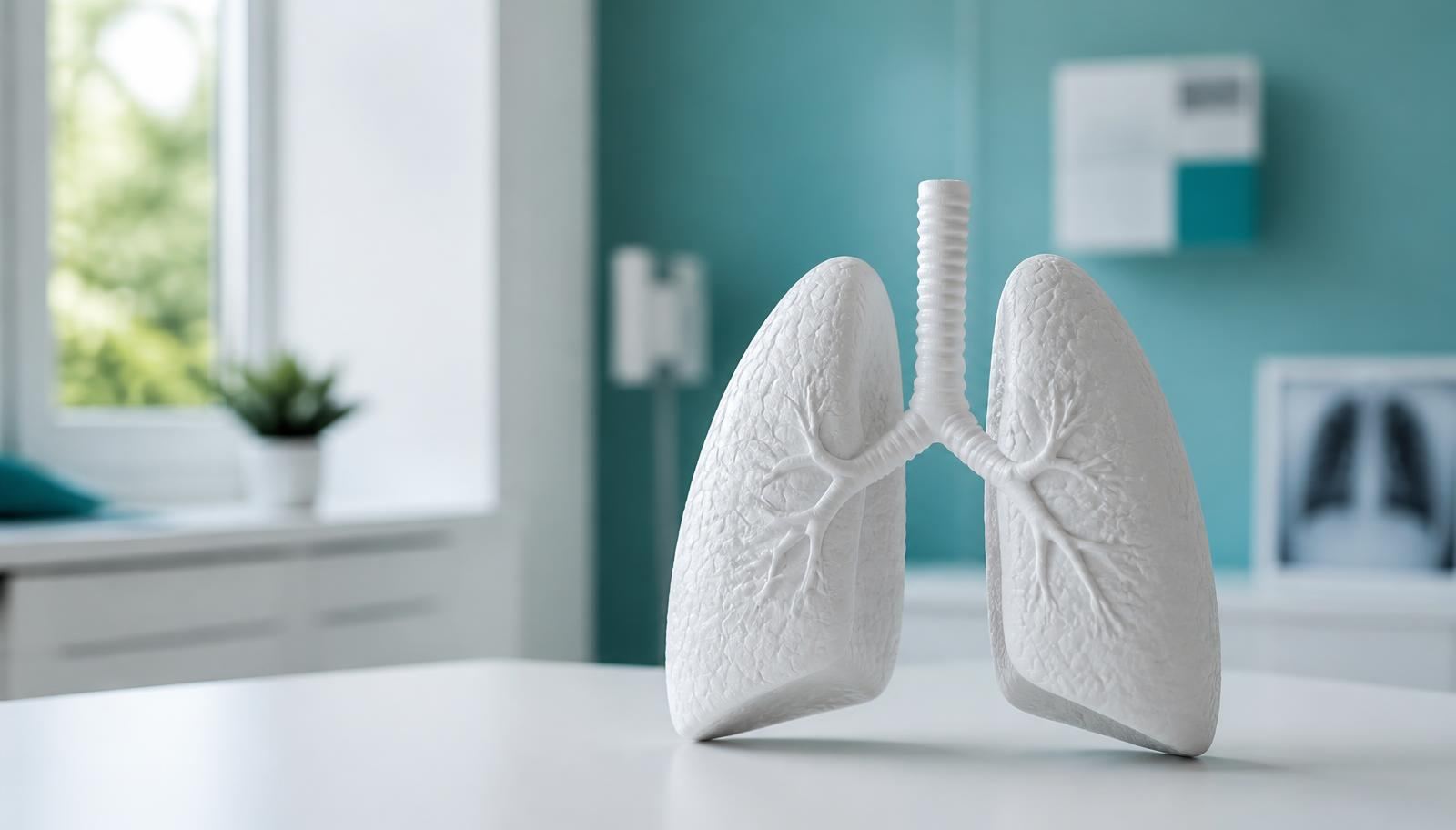
COPD combines two processes. In emphysema, the thin walls between alveoli break down, so the lung loses surface area for gas exchange and loses the elastic recoil that helps push air out. In chronic bronchitis, the airways are persistently inflamed, mucus production increases and small airways narrow. Most patients have a mixture of both, in varying proportions.
The distinction matters when judging any new treatment. Destroyed alveolar walls do not regrow. Persistent inflammation, on the other hand, is a biological process that can in principle be influenced, and that is where cell therapy research is focused.
Stem Cell Therapy for COPD in Thailand: What Is and Is Not Offered
What is offered at a responsible Thai clinic is an intravenous infusion of laboratory-prepared mesenchymal stem cells, given as an adjunct to full standard COPD management, with a written baseline and scheduled reassessment. The rationale is immune modulation rather than tissue replacement.
- Not offered: any promise to reverse emphysema or restore lost lung tissue
- Not offered: a substitute for inhalers, oxygen or pulmonary rehabilitation
- Not offered: treatment during an active exacerbation or chest infection
- Not offered: a stated improvement figure in lung function, because none is predictable
The breadth of conditions where mesenchymal cells are studied is covered in our overview of MSC therapy indications.
The Clinical Evidence in Chronic Lung Disease
Early phase trials of intravenous mesenchymal cells in COPD have consistently reported that the infusions were tolerated without major safety signals. Where inflammatory markers such as C-reactive protein were elevated at baseline, some studies observed reductions afterwards. What these trials have generally not shown is a reliable improvement in spirometry values.
| Outcome measure | What early studies suggest |
|---|---|
| Safety and tolerability | Generally favourable in reported trials |
| Inflammatory markers | Reductions reported in some patients with raised baselines |
| Lung function on spirometry | No consistent improvement demonstrated |
| Quality of life scores | Mixed, with small numbers and short follow-up |
Read plainly, this is a field at an early stage. That is a legitimate reason for some patients to consider it with open eyes, and no reason at all for anyone to promise results.
Assessment, Baseline Testing and Exclusions
Assessment starts before you travel, with a review of spirometry, imaging, exacerbation history, oxygen saturation and current medication. In Bangkok, testing is repeated so there is a same-day baseline: post-bronchodilator spirometry, saturation at rest and on walking, and a symptom score.
Patients are declined where there is an active exacerbation or infection, unstable oxygen requirement, recent cardiac event, suspected malignancy pending investigation, or continued smoking. That last point is not a moral position. It is that ongoing exposure drives the inflammation any treatment would be trying to influence.
How the Pathway Runs at Our Bangkok Facility
- Records review. Lung function, imaging and medication list assessed remotely before any travel is booked.
- On-site baseline. Repeat spirometry, saturation testing, bloods and a physician consultation.
- Infusion day. Intravenous delivery of laboratory-released cells with continuous saturation and vital sign monitoring.
- Observation. A monitored period after the infusion, with a next-day review.
- Documentation. A written record for your respiratory physician at home, listing what was given and what to monitor.
Laboratory standards behind the cells themselves are described in our guide to Thailand's stem cell standards and in how to check MSC cell quality.
Travelling to Thailand With Chronic Lung Disease
Long-haul flying is itself a physiological load for someone with COPD. Cabin pressure lowers available oxygen, and patients close to needing supplemental oxygen at ground level may require it in the air. That conversation belongs with your own respiratory physician before booking, not after arrival.
Bangkok's air quality also varies by season, which is worth factoring into timing for anyone with sensitive airways. Practical planning steps are set out in our Thailand medical travel checklist, and the wider service context on our lung disease treatment page.
Ask for a Straight Answer on Your Case
Send your spirometry and recent imaging for review. Our physicians will tell you whether an assessment in Bangkok is worth the trip, or whether it is not.
Schedule a Consultation