NAD+ IV Therapy at a Glance
NAD+ infusions differ far more between clinics than the shared name suggests. The variables that matter clinically are the delivered dose in milligrams, the infusion rate, the level of medical supervision, and whether the infusion is combined with co-factors such as B-complex, magnesium or glutathione.
The table below shows how dose typically tracks with infusion time and clinical purpose.
| Dose | Typical infusion time | Usually used for |
|---|---|---|
| 250 mg | 1–2 hours | First exposure, tolerance testing |
| 500 mg | 2–3 hours | Standard energy and cognitive protocols |
| 750–1,000 mg | 3–5 hours | Intensive loading phases |
These figures are for orientation only. At MRC Healthcare, dose and course length are set by a physician after a medical consultation and are specific to your indication.
How NAD+ Works in the Body
Nicotinamide adenine dinucleotide is a coenzyme present in every cell. It is required for mitochondrial energy production, for DNA repair through PARP enzymes, and for sirtuin activity involved in cellular stress responses. Tissue NAD+ concentrations decline substantially with age, and that decline is the biological rationale for repletion.
Intravenous administration bypasses first-pass metabolism in the gut and liver, which is the reason a clinical infusion produces a much higher acute exposure than any oral form.
Dose, Infusion Time and Course Structure
NAD+ is almost never administered as a one-off. A standard structure is a loading phase of four to ten sessions across two to four weeks, followed by maintenance every four to twelve weeks depending on response and objective.
- •Delivered dose. A 1,000 mg infusion contains four times the active compound of a 250 mg session. Two protocols described by the same name can differ entirely on this point alone.
- •Infusion rate. NAD+ cannot be rushed. A high-dose infusion occupies a clinical bed and nursing attention for most of a working day, and tolerability is directly rate-dependent.
- •Medical oversight and screening. Physician assessment, baseline laboratory work where indicated, and monitoring throughout the infusion.
- •Added co-factors. B-complex, magnesium, amino acids, vitamin C or glutathione are frequently combined with NAD+, and should be selected for a stated clinical reason rather than added by default.
A shorter course at an adequate dose is generally more useful than a longer course at a token dose — a high number of sessions is not a substitute for delivered milligrams.

What a Supervised Session Involves
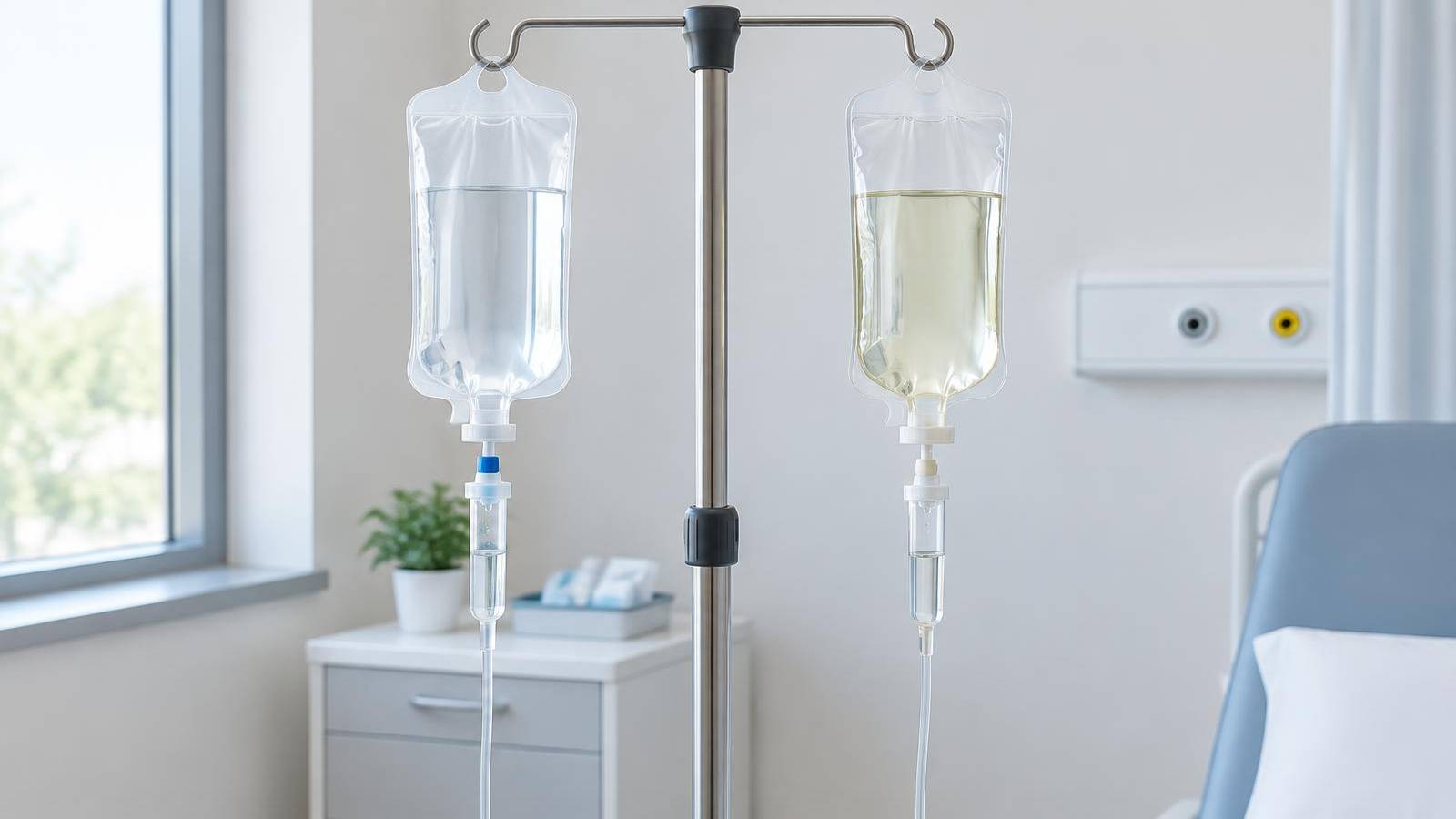
A properly delivered NAD+ session is a clinical procedure, not a beverage. It consists of:
- Medical consultation and screening — history, medication review, and exclusion of contraindications such as pregnancy, active malignancy, or uncontrolled cardiac and renal disease.
- Baseline laboratory assessment — where clinically indicated, to establish a reference point rather than to justify treatment retrospectively.
- Pharmaceutical-grade NAD+ and sterile compounding — prepared for the prescribed dose.
- Supervised administration — titrated infusion rate with monitoring, since tolerability is rate-dependent.
- Structured review — reassessment after the loading phase to decide whether maintenance is justified.
If a protocol does not identify the dose in milligrams and who supervises the infusion, it is not a comparable protocol.
Clinical Benefits and What the Evidence Supports
Reported clinical uses include fatigue and low energy, cognitive clarity, recovery support, and adjunctive use in longevity and metabolic protocols. The mechanistic basis is well characterised; the clinical trial literature in humans remains earlier-stage than the marketing around it, and outcomes vary between individuals. Patients should expect a supervised trial with reassessment, not a guaranteed result.
Side effects are dose- and rate-related: chest tightness, flushing, nausea, headache and abdominal cramping during infusion, all typically resolving when the rate is reduced. Related protocols are described on our NAD+ infusion page and within our broader anti-aging programme.
IV NAD+ Versus Oral NMN and NR
| IV NAD+ | Oral NMN / NR | |
|---|---|---|
| Delivery | Bypasses digestion; high acute levels | Absorbed as a precursor and converted |
| Best suited to | Short intensive loading course | Daily long-term maintenance |
| Supervision | Medical assessment required | Self-administered |
Oral NAD+ itself is not a meaningful option, as it is broken down before absorption. For most patients the practical structure is an intravenous loading course where a rapid increase is the goal, with oral precursors used for maintenance between clinical reviews.
NAD+ IV Therapy in Bangkok
Bangkok has become a practical destination for infusion-based longevity care, with physician-supervised protocols widely available to international patients. For those travelling, the relevant comparison is the delivered dose, the level of medical oversight, and how the loading course is scheduled around the length of the stay.
At MRC Healthcare, NAD+ is delivered under medical supervision at our facility at APAC Tower, 1319 Sukhumvit Rd, Phra Khanong Nuea, Watthana, Bangkok 10110, and is frequently scheduled alongside other protocols within a single visit. Available formulations and their ingredients are listed on our IV drips page.
What Affects NAD+ IV Therapy Pricing in Bangkok
Quoted figures vary widely because clinics are quoting different things. We do not publish figures — dose and course length are clinical decisions made after assessment — but the variables below explain why two Bangkok programmes described identically can differ substantially.
| Variable | Why it changes the quote | What to ask |
|---|---|---|
| Delivered dose | 1,000 mg contains four times the active compound of 250 mg | “How many milligrams per session?” |
| Chair and nursing time | High-dose infusions occupy a clinical bed for most of a day | “How long is the infusion scheduled to run?” |
| Medical assessment | Physician review and baseline labs may be bundled or separate | “Is consultation and screening included?” |
| Added co-factors | B-complex, magnesium or glutathione are often priced separately | “Which additions, and for what reason?” |
| Course versus single session | A loading phase is 4–10 sessions, not one visit | “How many sessions form the loading course?” |
The practical rule: compare on delivered milligrams and supervision, not headline session count. Related protocols are outlined on our NAD+ infusion page, and our guide to choosing a clinic in Thailand covers the same discipline for cell therapy.
Questions to Ask Before You Start
Related reading: what happens on the day of a NAD+ IV drip in Bangkok, NAD+ IV therapy side effects, and how to choose a NAD+ clinic in Bangkok.
- •What is the dose in milligrams per session, and how long is the infusion scheduled to run?
- •Which co-factors, if any, are added, and for what clinical reason?
- •Who supervises the infusion, and what is the protocol if symptoms occur mid-session?
- •How many sessions form the loading course, and what maintenance is recommended afterwards?
- •How and when will response be reassessed before further sessions are recommended?
Conclusion
NAD+ IV therapy varies widely between providers because clinics deliver very different doses, supervision levels and course structures under the same name. Comparing on delivered milligrams, medical oversight and course design makes the difference far easier to read.
The appropriate dose, course length and whether NAD+ suits your situation at all are clinical decisions, and they should follow a proper assessment.
Discuss a NAD+ Protocol with Our Medical Team
Our doctors set dose and course length after a medical evaluation. Speak with the MRC Healthcare team to understand what a NAD+ course would involve for your situation.
Schedule a Consultation