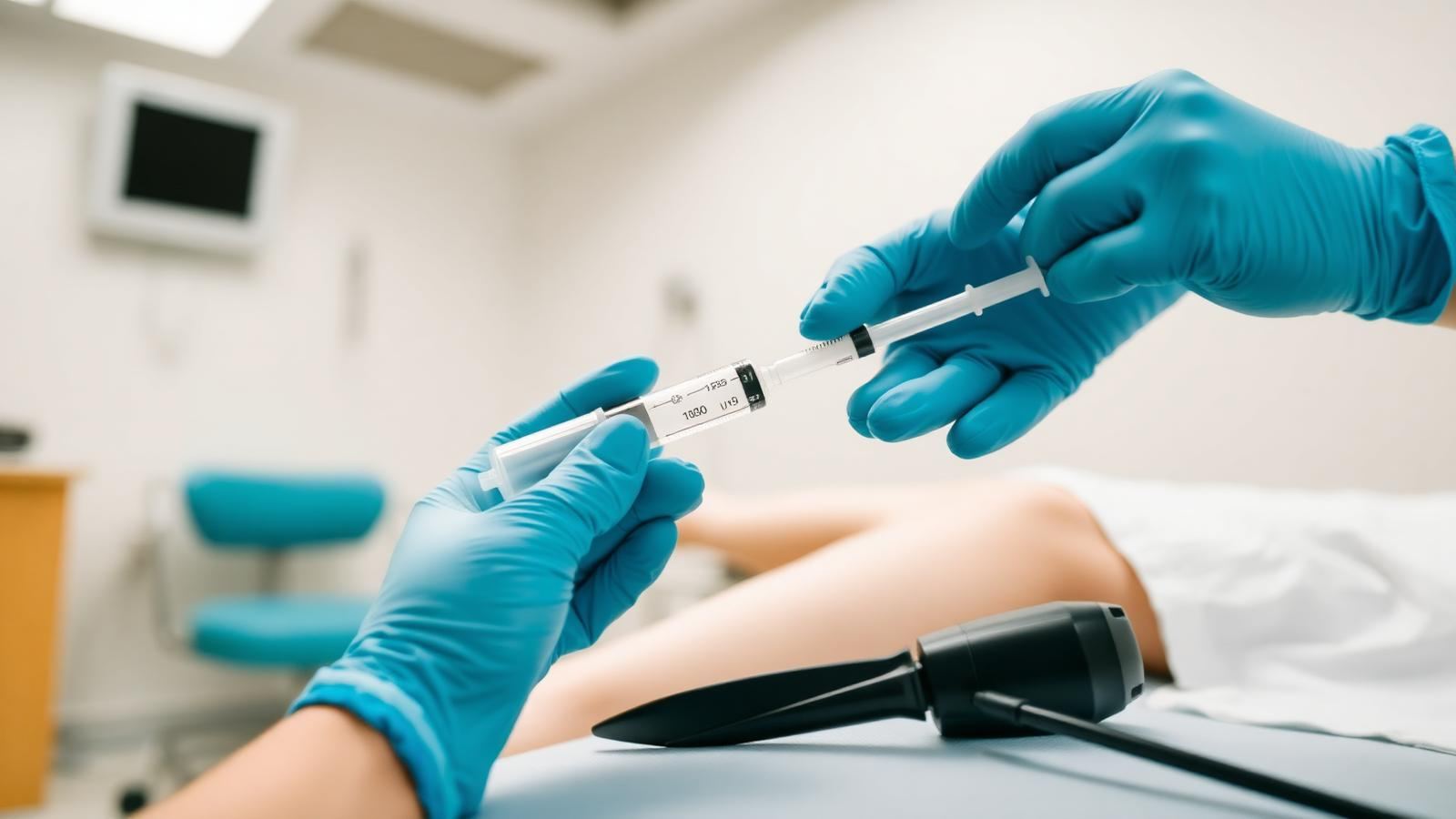
Asking whether stem cell therapy is painful is a fair question that rarely gets a straight answer, because the honest reply depends entirely on how the cells reach the tissue. An intravenous infusion, an injection into a knee and a bone marrow harvest are three very different physical experiences. This article describes each one on its own terms, so you know what you are actually consenting to.
Is Stem Cell Therapy Painful? The Short Clinical Answer
For the two most common routes used in regenerative practice, the answer is that the procedure is brief and largely tolerable:
- An intravenous infusion hurts only at the moment of cannulation
- An injection into a joint is performed after local anaesthetic
- Most discomfort patients remember comes afterwards, not during
- Harvesting your own tissue is the step that genuinely involves more discomfort
Pain is also individual. Anxiety, needle phobia, the joint being treated and how inflamed it already is all change the experience, which is why the pre-procedure conversation matters as much as the technique.
What an Intravenous Infusion Actually Feels Like
An IV infusion is the least eventful route physically. In sequence:
- A tourniquet is applied and a vein selected, which feels tight but not painful
- Cannula insertion is a brief sting, comparable to a blood test
- The infusion itself is generally not felt at all
- Some patients report a cool sensation along the arm as fluid runs
- Removal of the cannula is momentary
The session is spent sitting or reclining with monitoring in place. A step by step account of the wider visit is set out in what happens during MSC therapy.
What an Injection Into a Joint Feels Like
Intra-articular injection is the route most people picture when they ask whether stem cell therapy is painful. The experience breaks into three parts:
- Anaesthetic, a short stinging sensation as the skin and deeper tissue are numbed
- Needle placement, often guided by ultrasound, felt as pressure rather than sharpness once numb
- Delivery, described by many patients as a sensation of the joint filling or tightening for a few seconds
Deeper joints such as the hip involve a longer needle path and more pressure sensation than a knee. Assessment of joint cases is described on our joint pain treatment page.
Where the Real Discomfort Sits: Harvesting
If an autologous approach is used, cells are taken from your own body first, and that step accounts for most of the discomfort people report:
- Adipose harvesting under local anaesthetic, followed by several days of bruising
- Bone marrow aspiration, felt as a strong deep pulling pressure during aspiration
- A second site to care for while it heals, in addition to the treated area
Donor derived umbilical cord cells remove the harvest step altogether, which changes the comfort profile substantially. The clinical trade offs between the two sources, which are not only about comfort, are compared in UC-MSC versus autologous stem cells.
Comparing Discomfort by Delivery Route
| Route | During | Afterwards |
|---|---|---|
| Intravenous infusion | Brief sting at cannulation | Arm tenderness, occasional bruise |
| Knee injection | Anaesthetic sting, then pressure | Soreness and fullness for a few days |
| Hip or deep joint injection | More pressure, longer needle path | Ache on weight bearing for several days |
| Adipose harvest | Numb, with pulling sensation | Bruising and tenderness for days |
| Bone marrow aspiration | Strong deep pressure, seconds | Site ache for several days |
The route is chosen from the indication, not from comfort preference. Comfort is managed within whichever route is clinically appropriate.
Pain After Treatment and How It Is Managed
Post-procedure soreness is expected and follows a settling curve. What matters is that it eases rather than builds. Pain that increases day on day, or a joint that becomes hot and swollen, is reported to the clinic rather than medicated at home. The full recovery timeline is set out in how long stem cell therapy side effects last.
Ask for written analgesia guidance before you leave, since anti-inflammatory medication is sometimes restricted for a defined window after a biologic injection.
What Reduces Discomfort on the Day
- Tell the team about needle anxiety in advance so the pace can be adjusted
- Arrive well hydrated, which makes cannulation easier and quicker
- Ask for ultrasound guidance where the joint allows it
- Plan transport home rather than driving after a lower limb injection
- Arrange the day so nothing demanding is scheduled afterwards
None of these are cosmetic details. Preparation is the part of the experience patients have the most control over, and it consistently changes how the day is remembered.
Ask Exactly What Your Procedure Will Involve
Our physicians will explain which delivery route is appropriate for your case, what it feels like step by step, and how comfort is managed during and after the procedure.
Schedule a Consultation